
Best car seat cover waterproof for dogs usually means one thing in real life: you want your seats to stay clean even after wet paws, drool, lake days, or that surprise stomach issue on the way home.
But “waterproof” gets thrown around, and plenty of covers are only water-resistant, or they leak at seams, or they slide so much your dog ends up stressed and unstable. That’s when a simple accessory turns into a daily annoyance.
This guide helps you pick the right waterproof cover for your car and your dog, with a quick comparison table, a practical checklist, and a few honest callouts about what matters more than marketing claims.
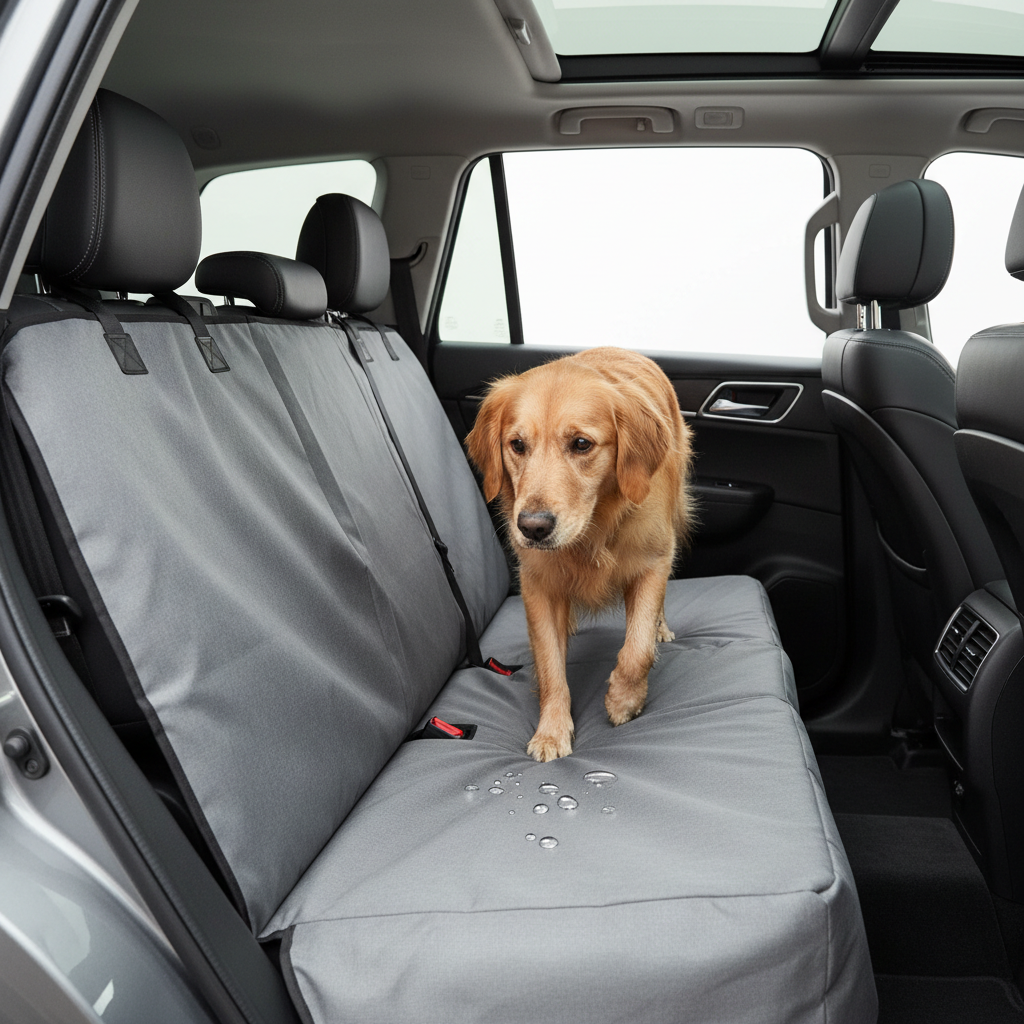
What “waterproof” really means for dog seat covers
For a cover to function as truly waterproof, the surface fabric and the construction both matter. A lot of products use a coating that beads water at first, then the liquid works through stitching or edges, especially after repeated washing.
- Waterproof layer: Often a TPU membrane or similar barrier sandwiched between fabrics, it blocks liquid instead of just repelling it.
- Seams and stitching: Needle holes can leak, some brands add seam binding or better seam placement, very few fully seal seams.
- Coverage design: A hammock style can catch spills and hair better than a simple bench cover, but only if it stays taut.
- Edge management: Side flaps and door protectors matter when your dog uses the door panel as a launch pad.
Also, waterproof does not automatically mean “non-slip.” That’s a separate feature, and for anxious or older dogs it can matter just as much as leak protection.
Quick comparison: which style fits your car and dog?
If you want one fast decision tool, use the table below, then read the next section to validate the details that make a cover hold up.
| Style | Best for | Pros | Watch-outs |
|---|---|---|---|
| Hammock | Most dogs in back seat | More coverage, helps prevent falling into footwell | Some block rear airflow, can interfere with child seat access |
| Bench cover | Dog + human sharing back seat | Easier passenger access, simpler install | Less protection for seat backs and footwell |
| Front seat cover | Solo dog rides up front | Quick on/off, focused coverage | Front-seat safety risks, avoid if dog is unrestrained |
| Cargo liner | SUVs, hatchbacks, larger dogs | Roomy, often easier for big dogs | Need bumper flap, edges can curl if not secured |
What to look for in the best waterproof cover (beyond the listing photos)
The “best” option depends on your dog’s size, behavior, and your car layout, but these specs tend to separate a reliable purchase from a regret buy.
1) Material stack that stays waterproof after washes
Look for a multi-layer build, ideally with a TPU barrier. If the product only mentions “water-resistant” or focuses on a surface coating, it may struggle with puddles, drool, or a full spill.
2) Non-slip backing plus seat anchors that actually grip
Sliding is the quiet deal-breaker. A textured backing helps, but the anchors and headrest straps do most of the work. Wide straps with sturdy buckles tend to hold tension better than thin webbing.
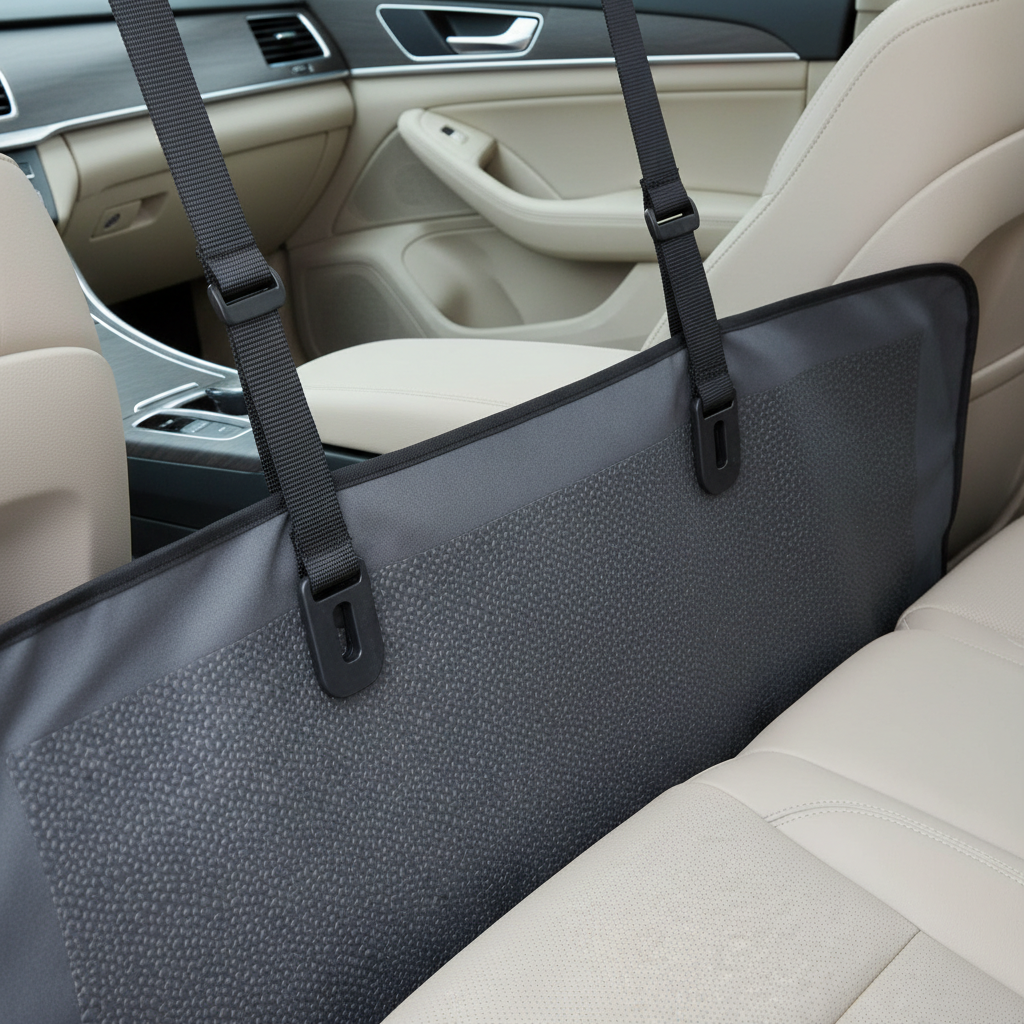
3) Fit and coverage where your dog causes the most mess
Many covers technically “fit” but leave the door side exposed, or the seat back uncovered, which is where nails and mud usually land. If your dog is a digger, prioritize reinforced panels and side flaps.
4) Access to seat belts and child-seat hardware
If you use a dog seat belt tether, a travel harness, or still need to access LATCH anchors, check for well-placed openings. Slits that are too big can become leak points, but no access at all creates daily friction.
5) Cleaning reality: hair removal and odor control
Some fabrics wipe clean but trap hair in the weave. Others shed hair well but show claw marks. If your dog sheds heavily, a smoother top layer often saves time, even if it feels less “rugged.”
Self-check: which situation are you in?
If you’re shopping for the best car seat cover waterproof for dogs, your needs usually fall into one of these buckets. Identify yours and you’ll avoid paying for features you won’t use.
- Wet adventures: frequent beach, rain, lake, grooming appointments, you need a true waterproof barrier and raised edges or good side flaps.
- Motion + anxiety: pacing, panting, slipping around, you need non-slip backing, tight strap geometry, and possibly a hammock to reduce instability.
- Heavy shedding: fur everywhere, you need a fabric that releases hair easily and seams that do not trap debris.
- Big dog or two dogs: more weight and claw force, you need stronger stitching, durable buckles, and wider coverage.
- Kid + dog carpool: shared space, you need a bench-style cover or a hammock with a split/zip section for passengers.
How to choose (and set up) a waterproof dog seat cover that stays put
Even a good cover can fail if it’s installed loosely, or if the car layout fights it. Here’s a setup flow that usually prevents the classic problems: sliding, leaking at edges, and hair sneaking underneath.
Step 1: Pick the style based on where your dog rides most
If your dog rides in the back seat and you want maximum protection, hammock is the default choice. If you regularly carry passengers, a bench cover keeps the back seat usable without unhooking everything.
Step 2: Measure the “real” width, not just the seat
Measure from door to door at the seating surface, plus the height of the seat back. Some covers leave gaps at the edges, and that’s where water runs down and soaks the seat.
Step 3: Install for tension
- Thread headrest straps so they pull straight, not diagonally.
- Push seat anchors deep into the crack, then sit on the cover to settle it.
- If the cover has corner elastic, use it, it reduces curling.
Step 4: Add restraint the safe way
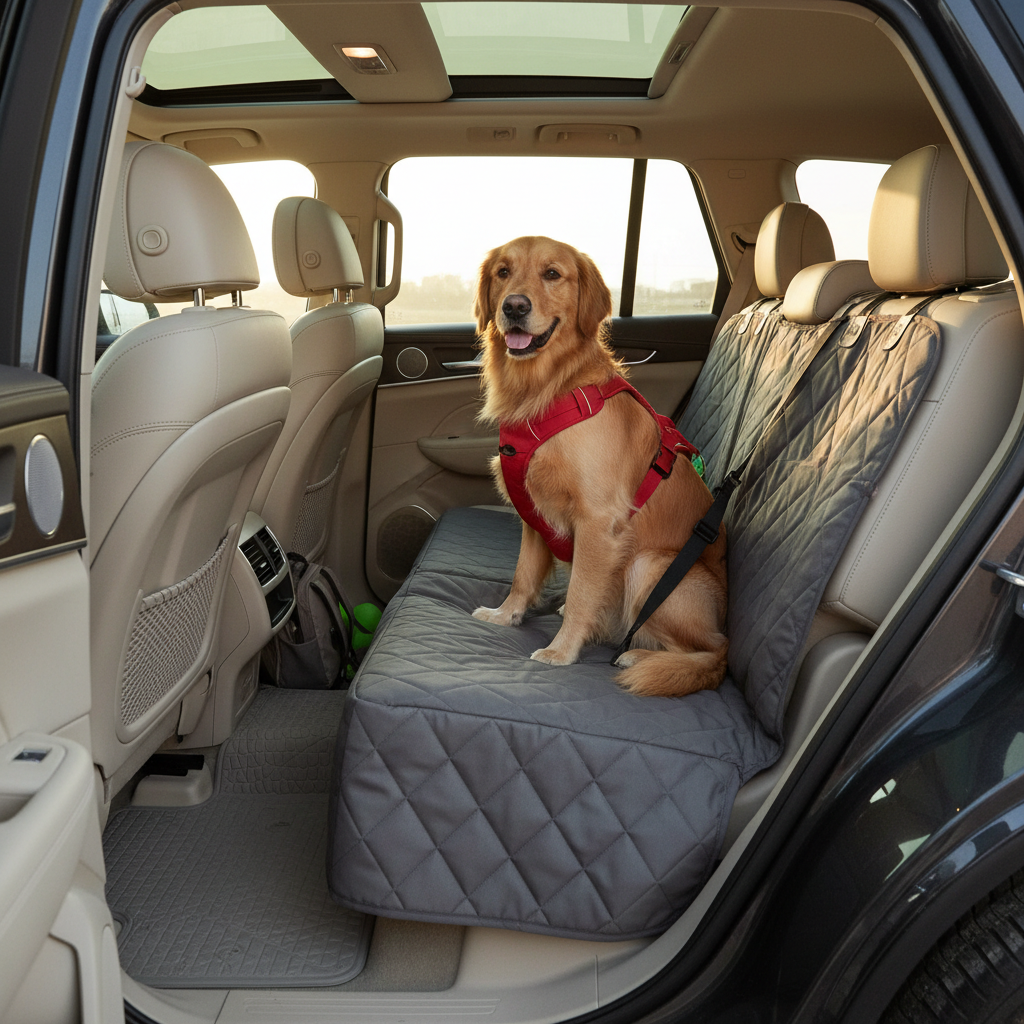
According to the American Veterinary Medical Association (AVMA), unrestrained pets in vehicles can be a distraction and may be at risk during sudden stops. Many owners use a crash-tested travel harness or secured crate system, and if you’re unsure what’s appropriate for your dog’s size and health, asking your veterinarian is a reasonable next step.
Practically, make sure the seat-cover openings line up with your restraint points, and avoid routing tethers in a way that twists or loads the cover seams.
Mistakes people make with “waterproof” covers
- Assuming all waterproof claims are equal: if seams leak, the barrier fabric does not save your seats.
- Ignoring the door zone: without side flaps, muddy paws still hit upholstery and panels.
- Washing too hot or drying too aggressively: some membranes can degrade, follow the care label, air-dry when in doubt.
- Letting grit build up underneath: sand and hair under the cover can abrade leather and leave dull patches.
- Choosing “one-size-fits-all” for tricky cars: deep bucket-style rear seats, fixed headrests, or captain’s chairs often need a more specific fit.
If you’ve tried one cover and it still leaked, it’s often not because you “picked wrong,” it’s because the leak path was predictable: stitching lines, gaps at edges, or an opening around a seat-belt slot.
Key takeaways and a practical buying shortlist
If you want a simple filter before you shop, this shortlist is what I’d keep on screen while scrolling product pages. It keeps you focused on performance, not just “tough-looking” fabric.
- True waterproof barrier (TPU or similar), not only a surface coating
- Non-slip backing plus deep seat anchors, sturdy straps
- Side flaps or door protectors if your dog is a door-scratcher
- Thoughtful access points for seat belts, LATCH, or dog tethers
- Easy cleaning with hair-friendly fabric and sensible seam placement
Choosing the best car seat cover waterproof for dogs is mostly about matching the cover’s weak points to your dog’s habits, then installing it tight enough that it behaves like part of the seat instead of a loose blanket.
Start by picking the right style, confirm waterproof construction and grip, then decide if you need side protection. That sequence saves time and usually saves money too.
FAQ
- What is the difference between waterproof and water-resistant dog seat covers?
Water-resistant covers repel small splashes for a while, but liquid can soak through over time. Waterproof options typically include a barrier layer that blocks moisture, though seams and openings still matter. - Do hammock-style covers work with dog car harnesses?
Many do, as long as there are proper seat belt access points. Before buying, check whether the openings align with where your harness tether clips in your specific car. - Will a waterproof cover protect leather seats from scratches?
It can reduce abrasion, but sharp nails can still leave marks, especially if grit gets trapped underneath. Regularly vacuum under the cover and consider nail trims or nail caps if scratching is frequent. - How do I stop a dog seat cover from sliding?
Prioritize a non-slip backing, use all seat anchors, and tighten straps so the cover stays under tension. If your seats are slick leather, sliding is more common, so fit and anchors matter even more. - Can I machine wash a waterproof dog car seat cover?
Often yes, but check the care label. Hot water and high-heat drying may reduce waterproof performance for some materials, so gentle cycle and air drying are a safer default. - What size cover do I need for an SUV or truck?
Measure the rear bench width and seat-back height, or consider a cargo liner if your dog rides in the trunk area. “Universal fit” can work, but SUVs vary a lot at the edges and headrests.
If you’re trying to narrow down options fast, focus on waterproof construction plus a stable install, then add the extras you actually need, like side flaps or split access for passengers. If you want, tell me your car model, dog size, and where your dog rides, and I can help you shortlist the most sensible style and feature set without overbuying.