
How to clean car steering wheel buttons sticky usually comes down to two things: breaking down skin oils and spilled residue, then drying everything without pushing liquid into the switches.
If your steering wheel controls feel gummy, slow to click, or seem to “grab” your finger, it’s more than a comfort issue, it can be distracting while driving. The good news is most cases are fixable at home with careful technique.
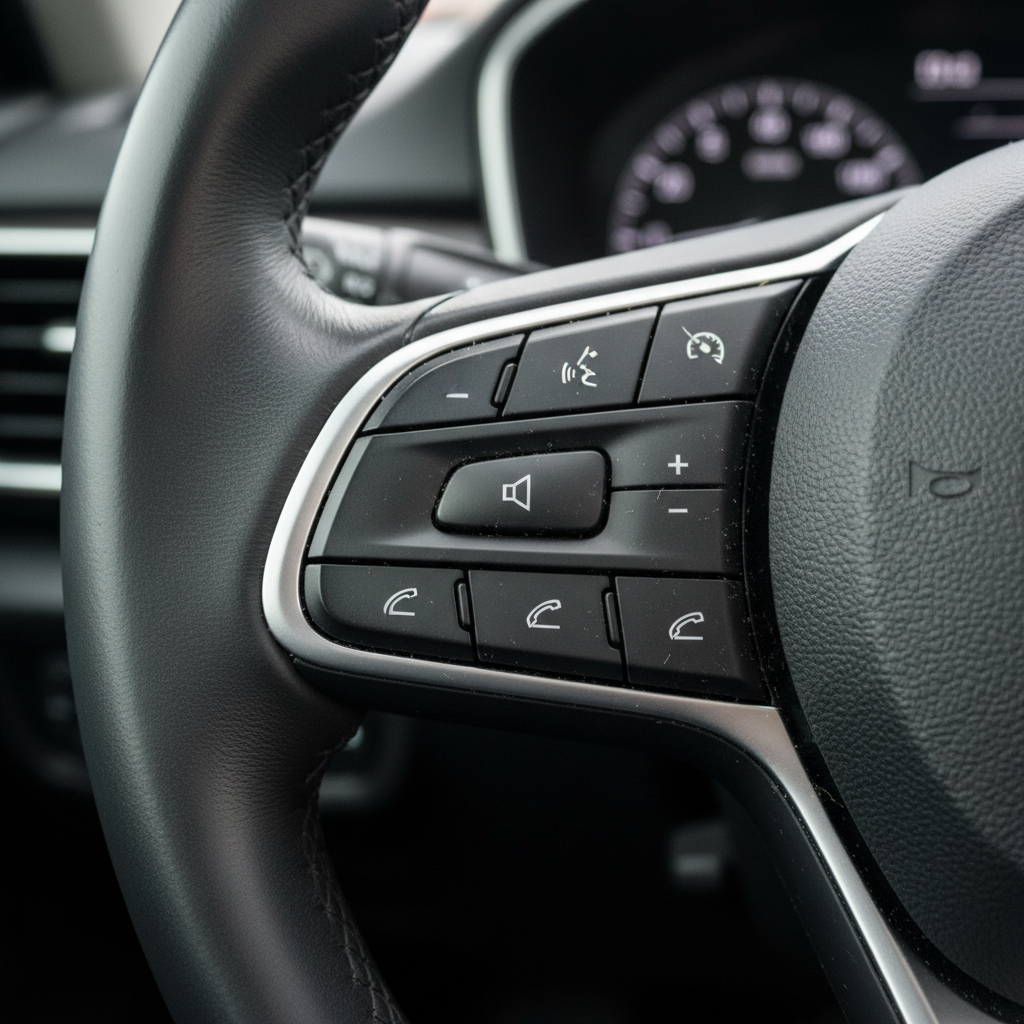
What trips people up is using the right cleaner but the wrong amount, a little too much spray can seep into button gaps. This guide focuses on safe products, light-touch methods, and quick ways to tell when the stickiness is actually a mechanical failure.
Key takeaway: You want a slightly damp applicator, not a wet surface, and you want to lift residue out of seams rather than “wash” it inward.
Why steering wheel buttons get sticky (real-world causes)
Sticky buttons rarely come from a single source. In many cars it’s a mix of residue plus heat cycling, which turns normal grime into a tacky film.
- Skin oils and hand lotion: sunscreen, moisturizer, and natural oils build up, especially on volume and phone buttons.
- Spills and aerosols: coffee mist, soda, energy drinks, vape residue, interior fragrance sprays, and even some glass cleaners can leave a grabby layer.
- Interior “shine” products: some dressings overspray onto the wheel and stay slightly tacky to the touch.
- Heat and UV: hot cabins can soften certain rubberized coatings, making them feel sticky even when they look clean.
- Aging coatings: the soft-touch finish can degrade and become permanently tacky, cleaning helps less in this scenario.
According to the National Highway Traffic Safety Administration (NHTSA) guidance on distracted driving, reducing in-car distractions matters, even small frustrations like unresponsive controls can pull your attention longer than you think.
Quick self-check: what kind of “sticky” is it?
Before you clean, spend 30 seconds figuring out whether you’re dealing with residue on the surface or stickiness coming from inside the switch.
- Surface tacky: finger drags across the button cap, edges look a bit shiny or smudged, clicking still feels normal.
- Edge buildup: button sticks only near the seam, pressing off-center feels worse, you may see grime in the gap.
- Mechanical sticky: button travel feels slow or doesn’t rebound consistently, tackiness isn’t really on the surface.
- Coating breakdown: the whole button area feels gummy, cleaning removes dirt but tacky feel returns fast.
If you suspect a mechanical issue, you can still do a gentle cleanup, but avoid flooding the area, and consider professional help if the button fails to return.
What to use (and what to avoid) on steering wheel controls
For how to clean car steering wheel buttons sticky without harming electronics, tools matter as much as the cleaner. Aim for low-moisture, interior-safe products.
Recommended supplies
- Microfiber towels (2–3, clean and dry)
- Cotton swabs or foam swabs for seams
- Soft detailing brush (very soft bristles)
- pH-neutral interior cleaner (spray onto towel, not the wheel)
- 70% isopropyl alcohol for stubborn oils, used sparingly
- Compressed air (optional) for dry debris, short bursts
Avoid these common mistakes
- Spraying cleaner directly into button gaps, this is how liquids migrate into switches.
- High-strength solvents like acetone, lacquer thinner, or aggressive degreasers, they can damage coatings and printed icons.
- Steam on steering wheel buttons, it introduces heat and moisture where you don’t want either.
- Magic erasers on icons, they’re mildly abrasive and can fade labels.
Step-by-step: clean sticky steering wheel buttons safely
This is the practical routine that works in most vehicles, including wheels with tight seams and textured plastics. Take your time, the goal is controlled cleaning.
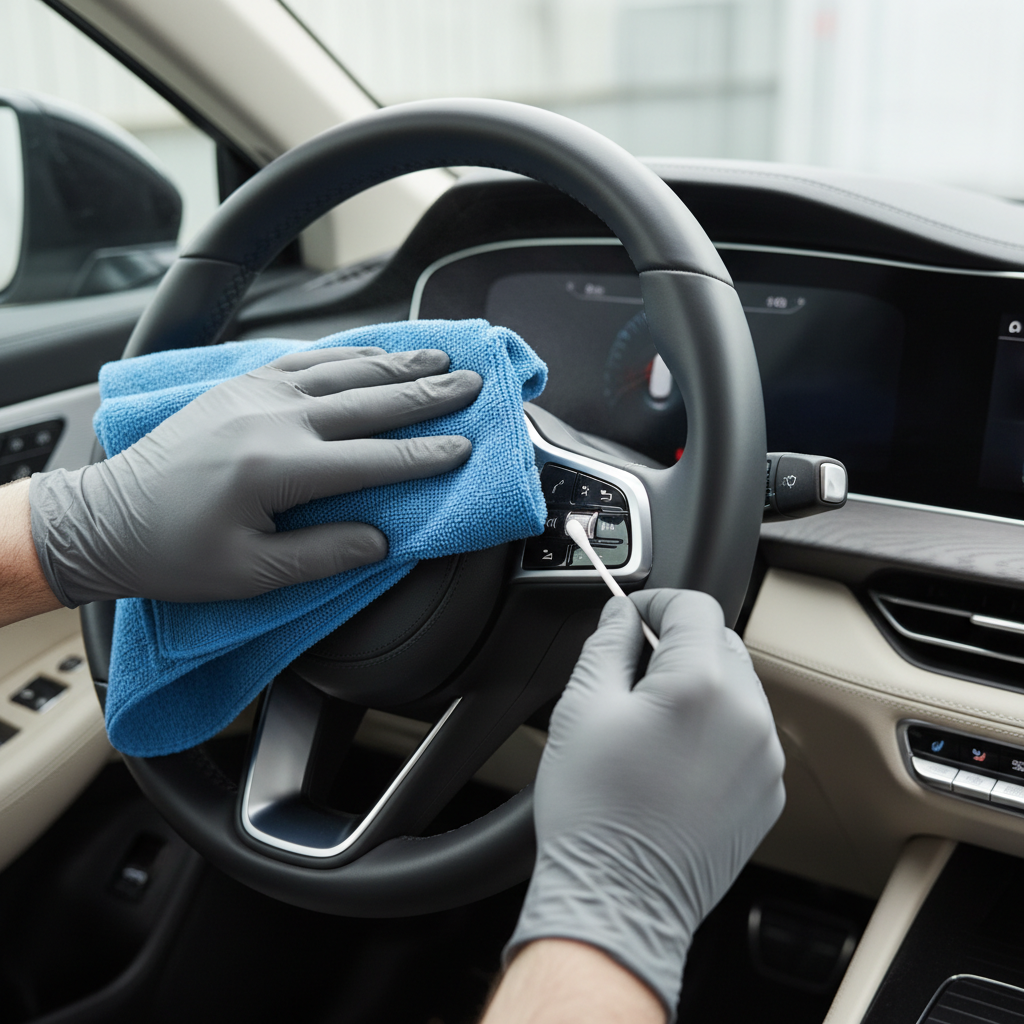
1) Prep the area
Park safely, turn the car off, and keep windows open if you’re using any alcohol-based cleaner. If you use the seat position memory, avoid moving the wheel a lot while you clean.
2) Dry dust removal first
Wipe with a dry microfiber. If there’s grit around edges, use a soft brush to loosen it, then wipe again. This reduces scratching when you move to damp cleaning.
3) Light damp wipe (no direct spraying)
Spray your interior cleaner onto a microfiber until it’s lightly damp, then wipe the button faces and surrounding trim. For how to clean car steering wheel buttons sticky, this step removes most oils without risking seepage.
4) Detail the seams
Dampen a swab slightly, then roll it along the edge gap. Don’t jab into the seam, think “wicking” residue outward. Swap swabs as they get dirty.
5) Spot treat stubborn tackiness
If residue still feels gummy, put a small amount of 70% isopropyl alcohol on a corner of microfiber, then wipe the button face quickly, follow with a water-damp microfiber (very lightly) and dry immediately. Test a hidden spot first if the wheel has a soft-touch coating or matte icons.
6) Dry and recheck button feel
Use a dry microfiber to remove any remaining moisture. Press each button a few times, you want normal rebound and a clean “click.” If stickiness returns right away, it may be coating degradation rather than dirt.
Choosing the right approach by situation (quick table)
Different messes respond to different tactics, and mixing products randomly can make residue worse. This table keeps it simple.
| Situation | What it usually is | Best approach | What to avoid |
|---|---|---|---|
| Buttons look clean but feel tacky | Oil film, lotion, interior dressing overspray | Interior cleaner on microfiber, then dry | Heavy spray directly on controls |
| Sticky around edges only | Grime packed in seams | Swab + light cleaner, roll outward | Poking swab deep into the gap |
| Soda/coffee spill | Sugary residue | Lightly damp wipe, repeat, dry thoroughly | Alcohol first (can set sticky sugar around edges) |
| Icons fading or surface peeling | Coating damage | Gentle cleaning only, consider repair | Abrasives, strong solvents |
| Button doesn’t rebound | Mechanical issue or contamination inside | Minimal moisture, then professional diagnosis | Flooding with cleaner to “free it up” |
Common mistakes that keep buttons sticky
People often “clean harder” when the real fix is “clean drier.” A few small habits make a big difference.
- Over-wetting the towel: if the microfiber can drip when squeezed, it’s too wet for steering wheel controls.
- Mixing products: silicone-based dressing plus alcohol can smear and create a strange tacky feel that mimics grime.
- Skipping the dry step: leaving moisture near seams can attract dust and recreate the sticky ring.
- Scrubbing printed icons: you can clean the grime and also remove the label, which is a bad trade.
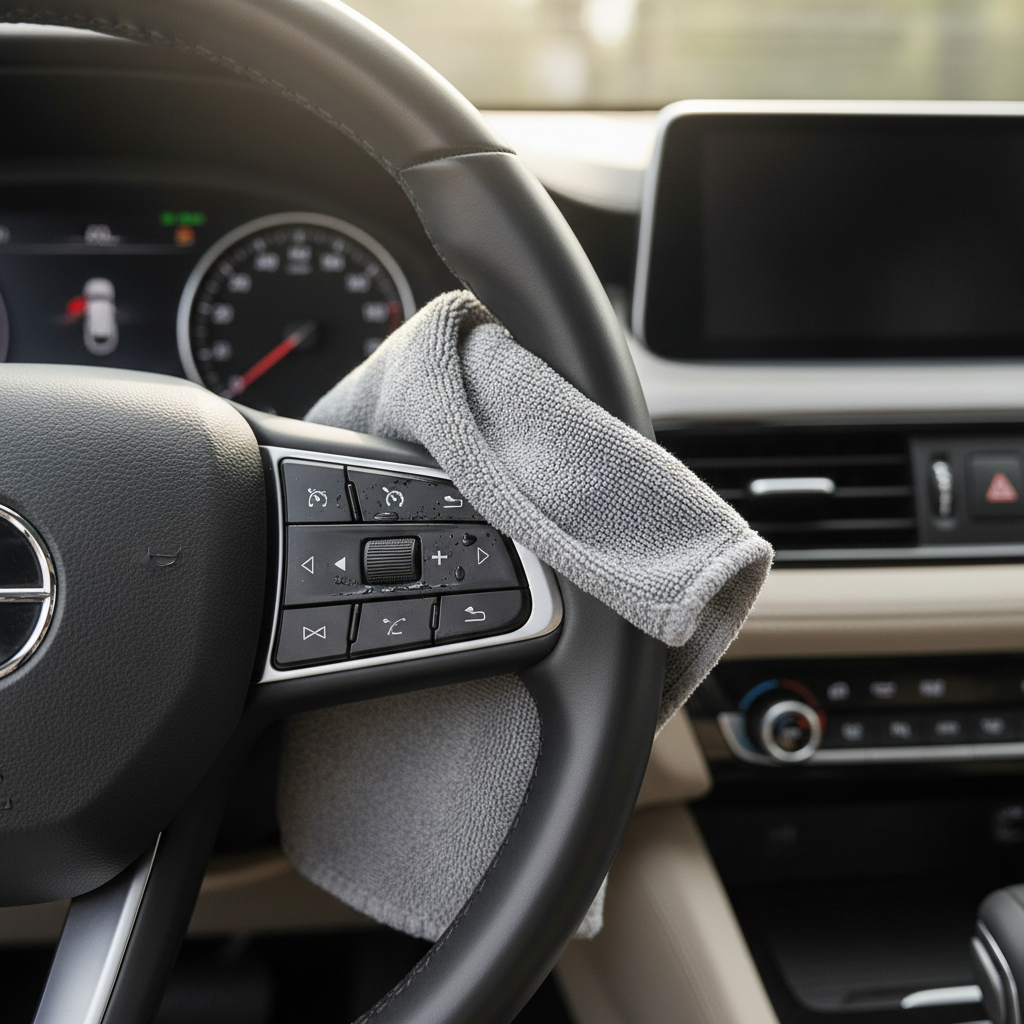
One more subtle issue: some “interior wipes” leave behind a fragrance or gloss agent. It can feel slick at first, then tacky later as it warms up in the sun. If you notice that pattern, switch to a residue-free interior cleaner.
When you should stop DIY and get professional help
If you’re trying how to clean car steering wheel buttons sticky and the buttons still bind, you might be dealing with internal contamination or switch wear. At that point, more liquid is rarely the answer.
- Button sticks down or fails to return consistently
- Controls trigger randomly or don’t register, even after drying
- Spill reached inside the wheel and you smell residue or see seepage near seams
- Airbag concerns: steering wheels house airbag components, disassembly should be handled by qualified technicians
According to the National Safety Council (NSC), staying focused while driving is critical, if steering wheel controls become unreliable, it’s reasonable to have a shop inspect the switch assembly. If your vehicle is under warranty, it may be worth checking before attempting deeper cleaning.
Conclusion: keep it clean, keep it dry, keep it predictable
How to clean car steering wheel buttons sticky works best when you treat it like electronics detailing, not like cleaning a cup holder. Use a lightly damp microfiber, detail seams with swabs, dry immediately, and don’t chase results with extra spray.
If you want one simple action today, wipe the wheel buttons weekly with a dry microfiber, and do a controlled damp wipe when you see shine or feel drag, it prevents the stubborn buildup that takes real time to remove.
FAQ
What is the safest cleaner for sticky steering wheel buttons?
A pH-neutral interior cleaner applied to a microfiber (not sprayed on the wheel) is usually the safest starting point. If that fails, small amounts of 70% isopropyl alcohol can help, but test first because some coatings react.
Can I use disinfecting wipes on steering wheel buttons?
Sometimes, but many disinfecting wipes leave residues or contain stronger solvents than you expect. If you use them, follow with a slightly water-damp microfiber and then dry, so you don’t leave a film that turns tacky later.
Why are my buttons sticky even after cleaning?
Two common reasons: residue has been pushed into the seam, or the soft-touch coating has started to break down. If the surface stays gummy no matter what, it may be material degradation, not dirt.
Is rubbing alcohol safe on steering wheel controls?
In many cases, 70% isopropyl alcohol used sparingly is okay for removing oils, but it can dull certain finishes and can lift printed icons if you scrub. Use it as a spot treatment, quick wipe, then dry.
Can I spray cleaner directly onto the buttons?
It’s a bad habit for steering wheels. Spraying creates droplets that can migrate into switch gaps, which can cause stickiness or intermittent behavior, putting product on a towel gives you control.
What if the button feels physically stuck down?
Stop adding liquid and let it fully dry, then reassess. If it still sticks or the function acts erratic, a technician can diagnose whether contamination reached the switch or if the switch mechanism is worn.
How often should I clean steering wheel buttons?
Light maintenance weekly or biweekly works well for most drivers, especially if you use hand lotion or drive in hot climates. A quick dry microfiber wipe prevents the “built-up ring” around seams.
If you’re trying to keep your interior feeling new without risking delicate controls, it can help to use a residue-free interior cleaner, soft swabs, and a routine that stays dry and consistent, it’s often the difference between buttons that feel crisp and buttons that keep turning sticky.