
Best car organizer front seat picks for 2026 come down to one thing most people miss, how your daily mess actually happens, not how a product photo looks on a perfect dashboard.
If you drive with a water bottle, a couple of receipts, maybe kids in the back, you already know the pattern, items slide into the passenger footwell, cords tangle, and you end up hunting for basics at red lights. A front-seat organizer won’t make your life “minimal,” but it can make your car feel predictable again.
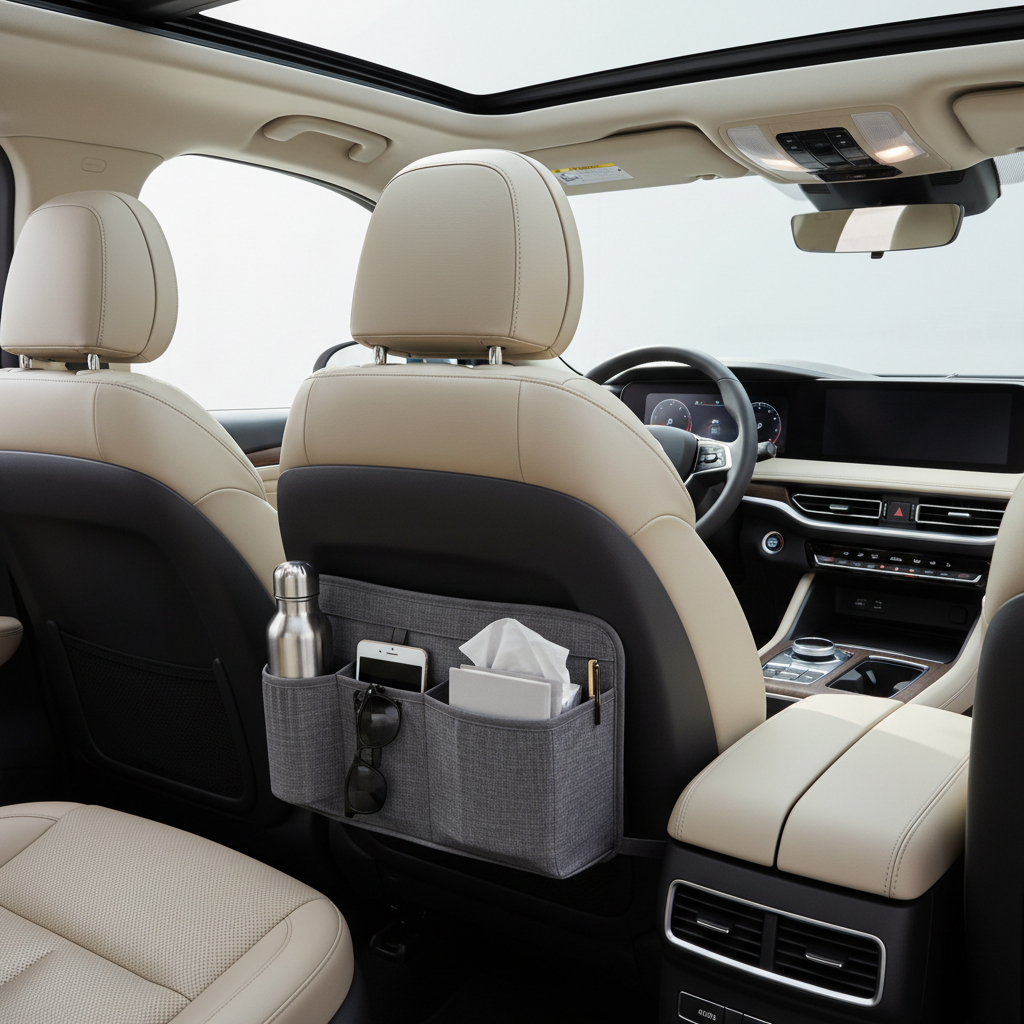
This guide focuses on what works for U.S. drivers in real conditions, different seat gaps, cup sizes, tall bottles, winter gloves, and that one sharp turn that sends everything flying. You’ll get a quick decision checklist, a comparison table, and setup tips that keep the organizer stable without becoming another “thing” to manage.
What makes a front-seat car organizer actually worth buying
The difference between a helpful organizer and a frustrating one usually shows up in week one. It’s not the number of pockets, it’s whether the organizer stays put, holds the stuff you carry, and doesn’t interfere with seatbelts or airbags.
- Stability: Look for rigid sides, a weighted base, grippy bottom material, or an anchoring strap. Floppy fabric bins tend to slump when half-full.
- Right-size pockets: “Many pockets” sounds great until none fit a 32 oz bottle or a modern phone with a case.
- Safe placement: Avoid anything that blocks access to the seatbelt buckle or could interfere with seat movement. When in doubt, place it low and tight to the seat base.
- Cleanability: Coffee spills happen. Wipeable liners and removable inserts matter more than fancy stitching.
- Comfort: If you’re tall, wide center consoles and bulky organizers can crowd your knee space.
Quick self-check: which organizer style fits your car and habits
Before comparing “best” lists, figure out which category matches your interior. This avoids buying something that looks right online but fights your seat geometry.
Answer these in 60 seconds
- Do you have a tight seat gap (less than about two fingers) between seat and console, or a wide gap where items drop?
- Do you mostly need cup space, or small-item control (keys, lip balm, toll tag, parking receipts)?
- Do passengers use the front seat often, or is it usually empty?
- Are you a rideshare/commuter who needs quick resets, or a family driver carrying wipes, snacks, and chargers?
- Do you need it to move between vehicles (work truck + personal car), or stay installed?
Rule of thumb: Wide seat gap and frequent small-item loss usually points to a seat-gap filler organizer. Mixed items and family use usually points to a freestanding caddy or console organizer.
Best front-seat car organizer types (and who each one is for)
Most “best car organizer front seat” options fall into a few shapes. Picking the right shape beats hunting for a magical brand.
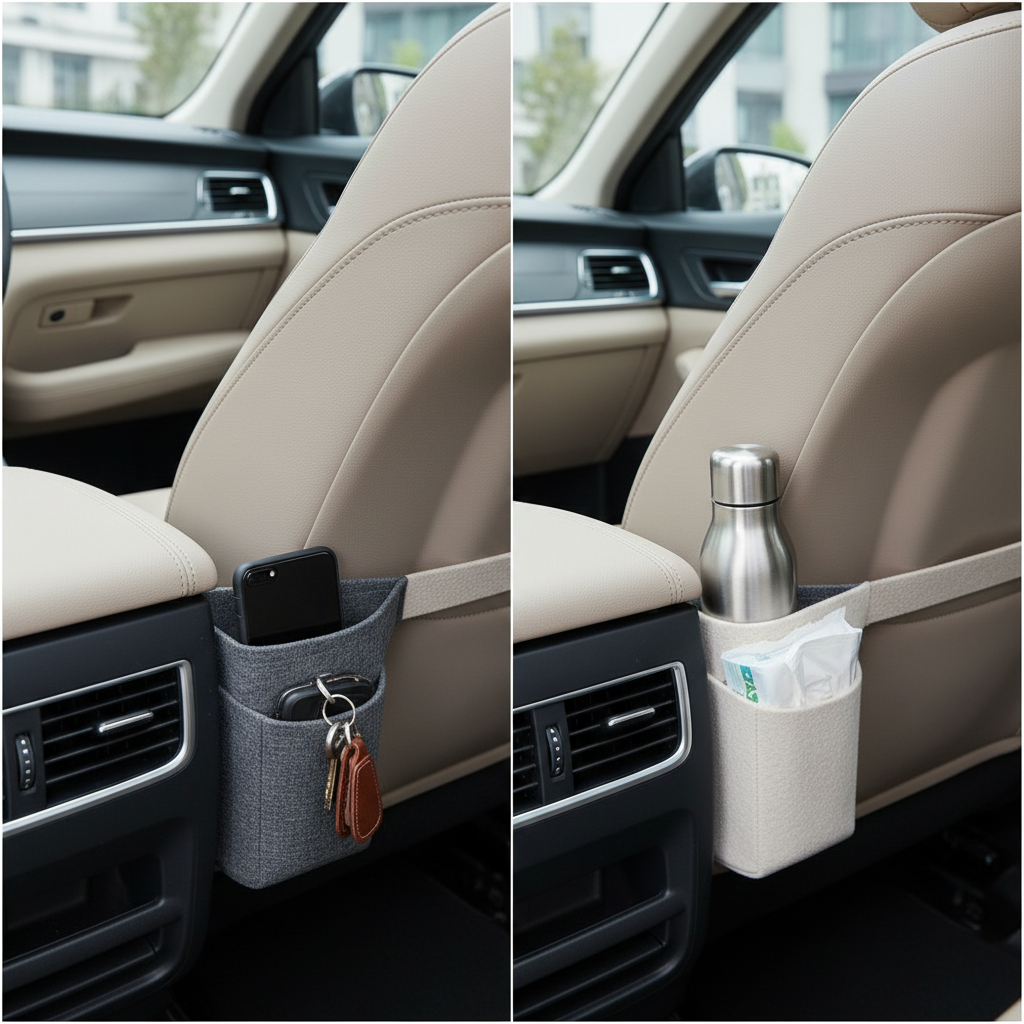
1) Seat-gap organizer (gap filler)
Best if you constantly drop your phone, cards, or keys between seat and console. It’s compact and stays close to where you reach.
- Pros: uses dead space, quick access, usually stable once fitted
- Cons: fit can be picky, may not hold tall bottles, can interfere with seat adjustment if oversized
2) Freestanding front-seat caddy (between seats)
Best if you want one “home base” for bottles, tissues, and random daily items. Many families prefer this because it’s easy to see and restock.
- Pros: higher capacity, can include trash pocket, easier to swap between vehicles
- Cons: can tip if lightweight, may crowd knee/leg space in smaller sedans
3) Back-of-seat organizer used from the front
Works when the passenger seat is often empty and you want items accessible but not on the center area. Better for flat items than bulky bottles.
- Pros: keeps center area open, good for tablets, documents, wipes
- Cons: less convenient while driving, can swing if not strapped tight
2026 comparison table: how to choose without overthinking
Instead of naming a dozen products that change every season, use this table to match your needs to a type and feature set. It’s the fastest way to land on a best car organizer front seat option for your situation.
| Organizer type | Best for | Must-have features | Watch-outs |
|---|---|---|---|
| Seat-gap organizer | Phone/keys stop falling, daily commuting | Snug fit, firm structure, non-slip surface | Seat movement clearance, shallow cup size |
| Between-seat caddy | Families, multi-item storage, long drives | Weighted base, bottle sleeves, easy-clean liner | Tipping on turns, knee room in small cars |
| Console-top organizer | Keeping console tidy, small items only | Dividers, anti-rattle padding | Blocks cupholders/controls if oversized |
| Passenger seat organizer (strap-in) | Work gear, delivery, rideshare setup | Seatbelt pass-through, rigid walls, carry handles | Occupies the seat, can become a projectile if not secured |
Practical setup steps that stop sliding, tipping, and “organizer regret”
Most complaints aren’t about storage, they’re about movement. A decent organizer installed poorly feels cheap, even if it isn’t.
For seat-gap organizers
- Test seat travel: Slide the seat forward/back and adjust recline before you commit. If it rubs, it will annoy you daily.
- Prioritize the driver side: If you buy a pair, install driver side first and live with it for a few days.
- Keep the top light: Put heavy items lower so the organizer doesn’t pop up on bumps.
For between-seat caddies
- Anchor if possible: Many caddies include a strap that loops around the console lid hinge area or seat rails. If yours has it, use it.
- Create zones: One pocket for “driving needs” (sunglasses, sanitizer), another for “parking needs” (garage clicker, coins). Mixing everything defeats the point.
- Reserve one pocket for trash: A small lined pocket beats loose wrappers migrating everywhere.
According to NHTSA, loose items in a vehicle can become projectiles in a crash, so it’s smart to store heavier items low and keep the front area uncluttered, especially near pedals and seat tracks.
Common mistakes (even smart shoppers make them)
These are the small misses that turn a “best” organizer into something you stop using.
- Buying for aesthetics over fit: If it doesn’t match your seat gap or console height, it will wobble no matter how nice the leather looks.
- Overloading the driver-side area: Too many items within arm’s reach can distract. Keep the driver area simple, put backup supplies elsewhere.
- Ignoring bottle reality: Many cup sleeves fit disposable water bottles but not insulated tumblers. Measure what you carry most.
- Forgetting climate: In hot states, softer plastics can warp, and “leather smell” can become overpowering. Fabric with a wipeable liner often ages better.
- Blocking controls: On some vehicles, a caddy can press against the parking brake lever, seat heater switches, or console lid.
When it’s worth upgrading, and when you should rethink the setup
If you’ve tried an organizer and it still feels messy, the issue might be the workflow, not the product. Upgrading helps when the organizer is too small, unstable, or hard to clean. Rethinking helps when you’re storing items that don’t belong up front.
- Upgrade if you need better anchoring, more rigid structure, or a layout that matches your daily carry.
- Rethink if you’re trying to store bulky gear, heavy tools, or too many backups within reach of the driver.
If you routinely carry items that could pose a safety risk, such as heavy metal bottles, tools, or unsecured electronics, consider a secured trunk or under-seat solution, and if you’re unsure what’s appropriate for your vehicle, it may be worth asking a qualified mechanic or vehicle safety professional.
Key takeaways and a simple recommendation
If you want the cleanest daily win, choose the organizer type based on your seat gap and the items you touch every drive, then install it with stability in mind. For many drivers, a snug seat-gap organizer on the driver side plus a small between-seat caddy for shared items hits the sweet spot without crowding the cabin.
Your next step is simple, measure the seat gap and your most-used bottle, then pick a layout that holds those two things comfortably. That’s how a best car organizer front seat choice stays “best” after the newness wears off.
FAQ
What is the best car organizer front seat setup for a small sedan?
Small sedans usually benefit from a low-profile seat-gap organizer because it doesn’t steal knee room. If you add a caddy, keep it narrow and make sure it won’t press into the console or seat controls.
Do seat-gap organizers fit all cars?
Not always. Fit depends on gap width, seat height, and how the console is shaped. If your seat moves a lot or the gap tapers, a flexible-but-firm model tends to work better than a rigid block.
Will a front-seat organizer interfere with airbags?
It can, depending on placement. Avoid mounting anything near side airbag seams on seats or blocking deployment zones. If your manual warns against seat-mounted accessories, follow that guidance.
What features matter most for families with kids?
Easy-clean lining, a dedicated trash pocket, and bottle sleeves that fit spill-resistant cups usually matter more than extra tiny pockets. A handle also helps when you need to remove it for a deep clean.
How do I stop a between-seat caddy from tipping?
Look for a weighted base or use a console/seat strap if included, then put heavier items on the bottom. If your seats are widely spaced, a wider base generally stays more stable.
Is it better to store items in the console instead?
For valuables and heavy items, the console can be safer and less distracting. The organizer is better for high-frequency items you grab daily, just keep it uncluttered and secure.
What should I avoid storing within reach of the driver?
Avoid loose heavy items, sharp objects, and anything that could roll under pedals. If you need to keep medical items accessible, it’s wise to secure them in a closed pouch that won’t open easily.
If you’re trying to pick a best car organizer front seat option quickly, start by listing the five items you touch every drive, then match them to one organizer style, not ten pockets you’ll never use. If you want, tell me your vehicle model and what you carry, and I can suggest the most practical organizer type and placement to try first.