
best car horn loud 12v searches usually come from one moment: you hit the horn and it sounds like a tired toy, then you wonder if anyone in the next lane even notices. A louder 12V horn can help you get attention faster, but only if it fits your car, matches your electrical setup, and stays on the right side of local rules.
This guide focuses on what actually matters when shopping in the U.S. market for 2026: realistic loudness ranges, horn types (disc, snail, air), install effort, and the small details that make the difference between “wow” and “why is this not working.” I’ll also flag common mistakes, because most horn returns happen for avoidable reasons.
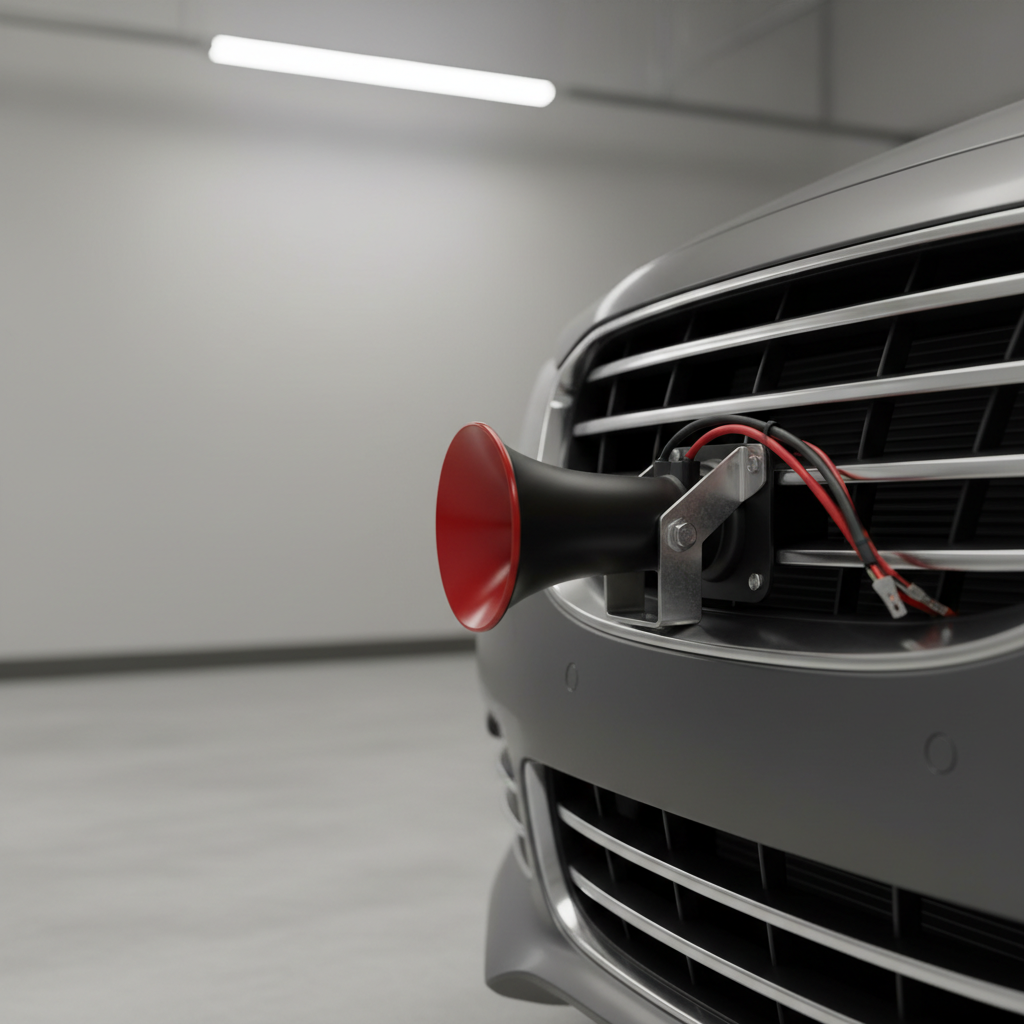
One more thing before we get into picks and specs: “loud” isn’t only decibels. Tone, frequency, and where the horn sits behind your grille can change how well drivers hear it through road noise and closed windows. That’s why two horns both labeled 120 dB can feel very different in real traffic.
What “loud” really means for a 12V car horn
Marketing numbers are messy, so it helps to know the basics. Decibels are typically measured at a certain distance and condition, and brands don’t always use the same method. According to OSHA, dB levels rise on a logarithmic scale, meaning small numeric increases can feel like a big jump to human ears, and prolonged exposure to high sound levels can raise hearing-risk concerns.
For car horns, you’re usually balancing “louder than stock” with “not painfully aggressive.” In practice, these rough ranges are common:
- 100–110 dB: Often similar to many OEM horns, sometimes a bit sharper
- 110–118 dB: Noticeably louder in typical city traffic, still manageable
- 118–130 dB: Very loud, more likely to need a relay and thoughtful placement
Tone matters as much as volume. A dual-tone setup (high + low) tends to cut through better than a single pitch, and it sounds more “car-like” instead of “aftermarket gadget.”
Quick comparison table: common loud 12V horn options
If you want a fast shortlist, use this table to map your needs to the right horn style. These are category comparisons rather than promises, because real results depend on mounting and wiring.
| Horn type | Typical loudness feel | Sound character | Install difficulty | Best for |
|---|---|---|---|---|
| Disc (flat) | Moderate | Simple, sometimes thin | Easy | Quick OEM replacement |
| Snail/compact trumpet | Moderate to loud | Fuller, “factory-like” | Easy to medium | Most drivers wanting louder without drama |
| Air horn (12V compressor) | Very loud | Attention-grabbing, truck-like | Medium to hard | Open-road use, heavy vehicles, high-noise environments |
| Train-style kits | Extremely loud | Novelty, harsh indoors/parking lots | Hard | Special builds where legal and practical |
How to choose the best loud 12V car horn for your vehicle
When people shop for the best car horn loud 12v option, they usually focus on dB and ignore fitment. Fitment is where most headaches start: not enough space behind the bumper, wrong bracket angle, water intrusion, or a connector that doesn’t match.
1) Fitment: space, mounting points, and “forward-facing” matters
- Measure space behind the grille or bumper cover, including depth
- Check bracket style: some horns need a solid L-bracket, others mount by a single tab
- Point the opening down or forward to reduce water ingestion; avoid pointing straight up
Compact snail horns win here because they fit many sedans and crossovers without custom fabrication.
2) Electrical: current draw and whether you need a relay
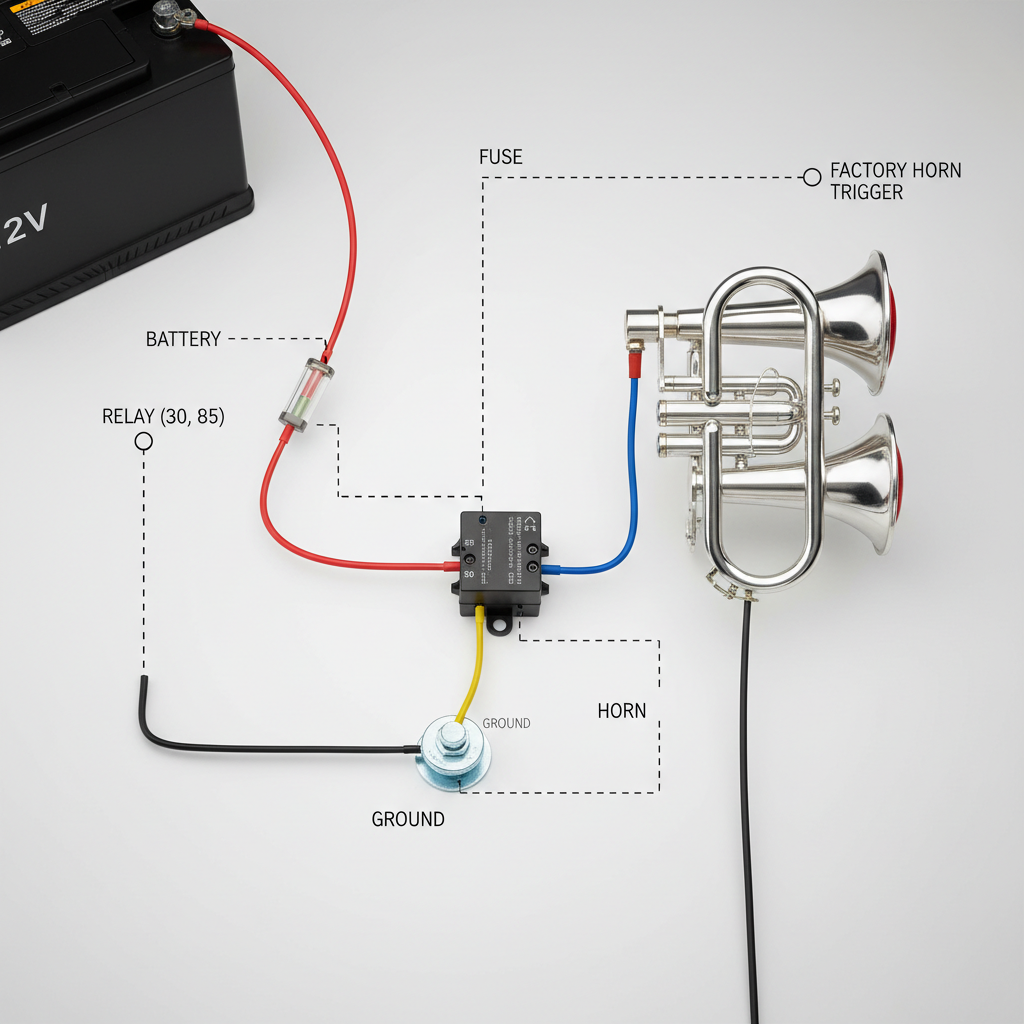
Many louder horns pull more amperage than your factory horn circuit expects. That’s why some installs “work” briefly, then blow a fuse, sound weak, or trigger intermittent issues. A relay lets the factory horn wire act as a signal, while the horn pulls power directly from the battery through a fused line.
- If the horn kit includes a relay + fuse, that’s usually a good sign for higher-output horns
- If you’re upgrading from a tiny OEM disc horn, assume you might need a relay even if the seller says “plug and play”
- Use appropriate wire gauge for the horn’s current draw, and keep runs short where possible
If you’re not comfortable with automotive wiring, a local installer or mechanic can do this quickly, and it often costs less than troubleshooting repeated fuse failures.
3) Tone choice: single vs dual tone
Dual-tone sets (often around 400–500 Hz combined character) tend to be heard better in mixed traffic noise. They also sound less “novelty,” which can matter if you want the horn to feel like it belongs on the car.
- Single tone: simpler wiring, sometimes easier fitment
- Dual tone: better presence, more “factory premium” vibe
4) Weather resistance: water and salt are the quiet killers
If you drive in rain, snow, or road salt, prioritize sealed connectors, corrosion-resistant terminals, and mounting that avoids splash zones. A horn that faces upward can fill with water and sound weak or fail.
Self-check: are you actually a good candidate for a very loud horn?
This is the part people skip, then regret. A very loud setup can be useful, but it can also be overkill for tight neighborhoods, parking garages, or frequent short commutes.
- You often drive at highway speeds with distracted drivers drifting into your lane
- Your current horn is noticeably quiet even with the hood open
- You have room for proper mounting and can add a relay if needed
- You’re willing to keep the horn use for safety, not “teaching lessons”
If you mostly drive in dense urban areas with lots of pedestrians, a cleaner dual-tone upgrade in the mid-loud range often feels more appropriate than a full air-horn kit.
Practical install steps (DIY-friendly, but don’t force it)
Many 12V horn installs are straightforward, but the “easy” path depends on your car. If you’re unsure, check a vehicle-specific forum or a service manual, or ask a shop for a quick quote.
Basic steps that apply to most vehicles
- Disconnect the battery before wiring changes
- Locate the factory horn(s), confirm access with the bumper/grille layout
- Test-fit the new horn and bracket, confirm clearance from radiator fans and moving parts
- If using a relay, mount it away from heat and water spray, and add an inline fuse close to the battery
- Ground to clean bare metal, paint and rust make grounds flaky
- Test the horn briefly, then reassemble and test again with the car fully buttoned up
Key point: a weak or “croaky” horn sound is often a grounding issue or voltage drop, not a defective horn.
Legal and safety notes (U.S. reality check)
Horn rules vary by state and sometimes by municipality, and enforcement varies too. Many places focus on “audible at a reasonable distance” and prohibit sirens, whistles, or excessively harsh novelty sounds for non-emergency vehicles. According to NHTSA, a horn is a required safety device on passenger vehicles, but local rules can still shape what’s acceptable in tone and use.
If you’re considering an air horn or a very high-output setup, it’s smart to:
- Check your state vehicle code for restrictions on sound types and “unreasonably loud” operation
- Avoid emergency-like tones
- Use the horn for safety alerts, not prolonged blasts
If you have hearing sensitivity, tinnitus, or you drive with passengers who do, it may be worth choosing a strong dual-tone upgrade instead of the loudest option available, and you can also ask a professional installer about sound direction and mounting to reduce cabin shock.

Common mistakes that waste money (and how to avoid them)
- Chasing max dB only: a harsh tone can be less effective than a strong dual-tone
- No relay on high-draw horns: leads to weak output, blown fuses, or intermittent honking
- Bad ground: the horn “works” but sounds sick, especially in cold weather
- Wrong orientation: mounting where water collects shortens life
- Assuming plug-and-play: connector adapters may be needed, and some cars need two horns to avoid warning codes
If you want the upgrade to feel boring in the best way, aim for clean wiring, a fused supply, and a mounting point that doesn’t vibrate.
Conclusion: what to buy if you want loud without regrets
The “best” choice usually lands in a loud dual-tone snail horn set with a relay and solid weather protection, because it hits the sweet spot of volume, tone, and install realism for most U.S. cars. If you truly need more presence due to road environment or vehicle size, a 12V air horn kit can work well, but only when mounted and wired carefully, and only where its use stays appropriate.
Action steps: measure your mounting space, confirm whether your circuit can support the horn or needs a relay, then choose tone and loudness that fit your daily driving, not your worst-day scenario.