
The best car sun visor organizer is the one that keeps essentials reachable without sagging, blocking your mirror, or turning into a clutter pouch you avoid opening.
If you drive often, you already know the pain points: sunglasses sliding into the console, toll tags missing when you need them, and that one loyalty card you always “just had.” A visor organizer can fix this, but only if it fits your visor, matches what you carry, and doesn’t interfere with safe driving.
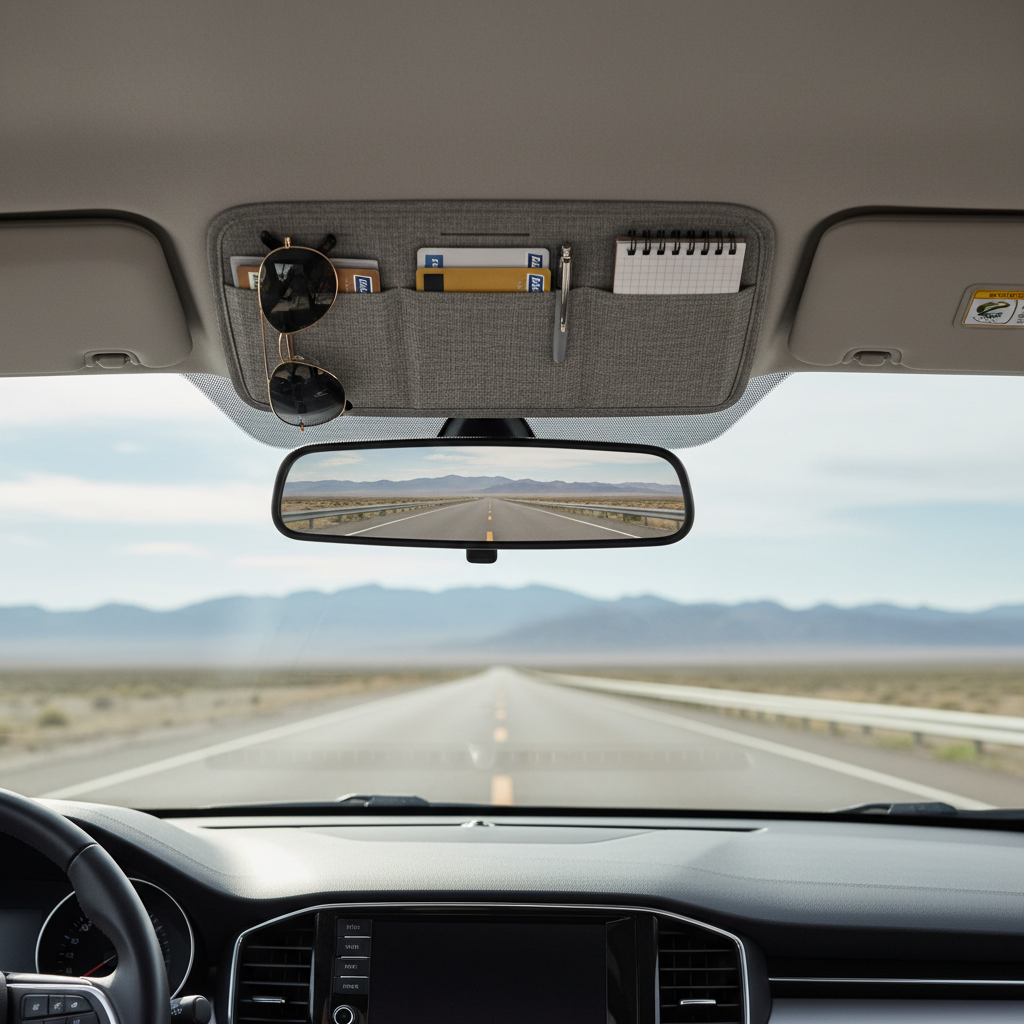
This guide narrows the field with practical criteria and a short list of 2026-ready picks by use case. You’ll also get a quick fit checklist, a comparison table, and a few “don’t do this” notes that save real frustration.
What usually makes a visor organizer “the best” in real life
Most visor organizers look similar online. The difference shows up after a week: drooping corners, warped elastic, and pockets that are either too tight for modern sunglasses cases or too loose for cards.
- Secure mounting: Strong elastic straps or a stable clip system that doesn’t twist your visor when you flip it down.
- Low-profile thickness: If it’s bulky, it can rub the headliner or reduce mirror visibility, especially in compact cars.
- Pocket usability: Card slots that don’t eject cards, a sunglasses holder that doesn’t scratch lenses, and a pen loop that actually holds a pen.
- Heat tolerance: Interiors get hot; cheaper faux leather and weak adhesives can warp or peel over time.
- Visibility and safety: Nothing should cover warning labels, block the mirror, or distract you while driving.
According to NHTSA, driver distraction is a major safety concern, so any organizer that encourages fiddling while moving defeats the purpose. The goal is quick access when parked or stopped, not “more stuff above your face.”
Quick fit & compatibility checklist (do this before buying)
Before you search “best car sun visor organizer” again, check these basics. It’s boring, but it prevents most returns.
- Visor thickness: Some visors are thick and padded, others are slim. Measure if you can, or at least compare by feel.
- Vanity mirror location: If your visor mirror is central, avoid wide organizers that cover it.
- Airbag labels and sensors: Don’t cover labels, and avoid anything that presses into trim near airbags.
- Your carry list: Be honest. If you carry 2 cards and sunglasses, a slim model wins. If you carry receipts, a small notebook, and garage remotes, you need structured pockets.
- Climate and parking: Hot sun daily suggests stitching and materials matter more than “cool features.”
Rule of thumb: if your visor already feels heavy or doesn’t stay up perfectly, choose the lightest organizer option you can live with.
Best sun visor organizers for 2026 (by scenario)
There isn’t one universal winner. Below are the most reliable “types” to shop for, plus who they fit best.
1) Slim essentials organizer (best for most commuters)
If you just want cards, sunglasses, and maybe a pen, a slim organizer is often the best car sun visor organizer style. It keeps weight low and reduces the chance of visor droop.
- Look for: 6–10 card slots, one sunglasses sleeve, a tight elastic pen loop.
- Avoid: bulky zip compartments and thick padding.
- Best for: sedans, compact SUVs, daily commuting.
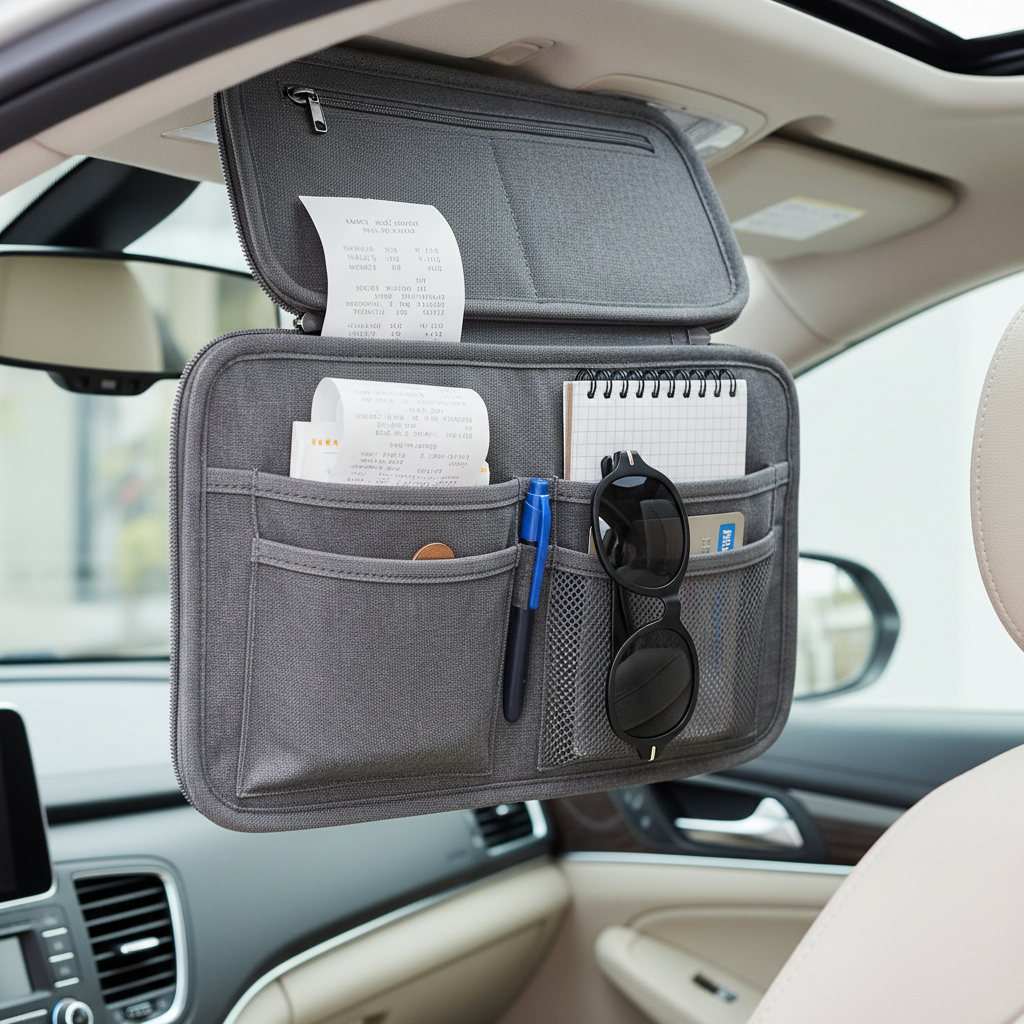
2) Zippered pouch organizer (best for “I carry more than I admit”)
Zippered models handle receipts, parking stubs, and small tools better, but they can get chunky fast. If you choose this style, pick one with a stiff backing so it doesn’t flop.
- Look for: flat zipper track, structured compartments, minimal depth.
- Best for: road trips, rideshare drivers, parents.
3) Magnetic sunglasses clip + mini card sleeve (best minimalist setup)
Some people don’t need a full organizer. A quality magnetic glasses clip plus a tiny card sleeve reduces clutter and usually keeps the visor’s movement smooth.
- Look for: padded magnetic contact points, a clip that fits your visor thickness.
- Best for: people who hate “stuff,” smaller vehicles.
4) Dual-visor / wide organizer (best for trucks and larger cabins)
In larger vehicles, a wider organizer can work because mirror visibility is less sensitive. Still, you want a design that stays flat and doesn’t bow at the center.
- Look for: strong dual straps, reinforced spine, low-glare material.
- Best for: trucks, full-size SUVs, work vehicles.
Comparison table: how to choose fast
Use this table to match the organizer type to your priorities. It’s not about “most features,” it’s about fewer annoyances.
| Type | Capacity | Bulk on visor | Best for | Watch-outs |
|---|---|---|---|---|
| Slim essentials | Low–Medium | Low | Commuters, everyday use | Card slots can stretch if overfilled |
| Zippered pouch | Medium–High | Medium | Receipts, small items, travel | Can sag, can block mirror if thick |
| Magnetic clip + sleeve | Low | Very low | Minimalists, smaller cars | Cheaper magnets can slip on bumpy roads |
| Wide organizer | High | Medium–High | Trucks, large cabins | Higher chance of mirror obstruction |
How to set it up so it stays put (and doesn’t become clutter)
The install is simple, but the setup is where most people lose the benefit. A visor organizer works best when each pocket has a “job.”
- Top priority zone: sunglasses, parking card, toll transponder card, or garage remote.
- Secondary zone: insurance and registration copies, a small emergency contact card.
- One pen only: extra pens turn into rattling junk fast.
- Receipt policy: keep a single “temporary pocket,” empty it weekly.
If you’re testing what feels right, park first, then simulate grabbing items with the visor down. If you find yourself twisting your wrist or hunting, rearrange now, not later.
Safety notes and common mistakes (small details, big difference)
Most issues aren’t dramatic, they’re annoying and persistent. Fix them early and your purchase starts feeling “worth it.”
- Blocking the mirror: If any pocket edge intrudes into your mirror view, switch to a slimmer model.
- Overloading: A packed organizer makes the visor heavy and can cause it to drop unexpectedly.
- Loose straps: If straps slide, add grip using a thin non-slip pad strip, but avoid adhesives that can damage upholstery.
- Heat-sensitive items: Some cards, cosmetics, or batteries may degrade in high heat; store sensitive items elsewhere.
- Driving while rummaging: If you need something, pull over. Convenience should not increase distraction risk.
According to AAA, distraction can come from seemingly quick tasks inside the vehicle, so treat the visor organizer like a parked-only access point whenever possible.
Key takeaways (so you can buy with confidence)
- Choose slim unless you truly need storage, visor droop is the #1 regret.
- Fit matters more than “number of pockets”, especially around mirror and visor thickness.
- Give every pocket a purpose, otherwise it becomes an overhead junk drawer.
- Keep safety in mind, easy access should not mean more distraction.
Practical buying guide: what to look for on product pages
Product listings can be vague, so focus on clues that predict real-world use. This helps you land on a best car sun visor organizer option that actually holds up.
- Photos with the visor down: You want to see thickness and mirror clearance.
- Material description: stitched edges and structured backing usually last longer than thin glued layers.
- Strap width: wider straps tend to distribute weight better and reduce twisting.
- Sunglasses holder design: soft-lined sleeve or a secure clip that won’t pinch frames.
- Return policy: fit issues are common across vehicle models, so flexibility helps.
If you’re stuck between two models, pick the one with fewer compartments and better structure. Extra slots feel tempting, but they invite overfilling.
Conclusion: the “best” is the one you’ll keep using
For most drivers, a slim organizer with a dependable sunglasses holder is the safest bet, it stays flatter, it’s easier to keep tidy, and it rarely interferes with visibility. If you carry receipts and extras, a structured zip model can work, just keep it light.
Your next step is simple: check visor thickness, confirm mirror clearance, then buy the organizer type that matches what you actually carry. If you do that, you’ll stop re-buying this category every year.
FAQ
What is the best car sun visor organizer for sunglasses?
Usually a slim organizer with a dedicated, soft-lined sunglasses sleeve works well, it protects lenses and doesn’t add much bulk. If you prefer a clip, look for padded contact points so frames don’t get marked.
Will a visor organizer damage my sun visor?
Many don’t, but tight clips, rough backing, or heavy overloading can leave impressions over time. If your visor fabric feels delicate, choose wide elastic straps and avoid rigid clamp-style mounts.
Do visor organizers fit all cars?
Not always. Visor thickness, mirror placement, and headliner clearance vary by model. That’s why checking dimensions and looking for photos showing the visor flipped down matters more than brand names.
Is it safe to keep insurance and registration in the visor organizer?
It can be convenient, but consider theft risk and local guidance. Many people keep photocopies up top and store originals more securely; if you’re unsure what’s appropriate, consider checking your state guidance or asking an insurance professional.
How do I stop a visor organizer from sliding?
Try re-centering straps closer to the visor hinges and tightening evenly, uneven tension often causes drift. If it still slides, switching to a wider-strap model usually helps more than adding sticky pads.
What should I avoid storing in a visor organizer in summer?
Anything heat-sensitive like certain batteries, cosmetics, or items that can warp or leak. Interiors can get extremely hot, and damage varies by product, so when in doubt, store sensitive items in a cooler compartment.
Are leather visor organizers better than fabric?
It depends. Faux leather can look clean but may peel in heat if quality is low, while fabric can fade or stretch. Look for good stitching and structure rather than choosing purely by surface material.
Looking for an easier setup?
If you’re trying to reduce car clutter without overthinking it, start with a slim organizer and a simple “one pocket, one purpose” rule for a week. If that feels too tight for your routine, move up to a structured zip style, it’s usually a smoother upgrade than buying the biggest organizer right away.