
Best car exhaust pipe sealant choices matter most when you’re chasing an annoying tick, a small leak near a joint, or that faint exhaust smell that makes you second-guess every drive. The right product can quiet things down and buy you time, but the wrong one can crumble, smoke, or simply blow out the first time the pipe heats up.
A lot of people get stuck because “exhaust sealant” sounds like one category, when it’s really a few different materials with very different temperature limits and use cases. Add rust, vibration, and weird joint shapes, and a tube that works on one car can disappoint on another.

This guide keeps it practical: how to pick the right type, how to tell if sealant is even appropriate, and how to apply it so it actually lasts. I’ll also call out the common traps, especially around catalytic converters, O2 sensors, and hot sections near the engine.
What “exhaust pipe sealant” really means (and why people pick the wrong one)
Most sealant failures come from a mismatch between product type and the job. A muffler paste behaves nothing like a high-temp RTV silicone, and neither behaves like a wrap or bandage kit.
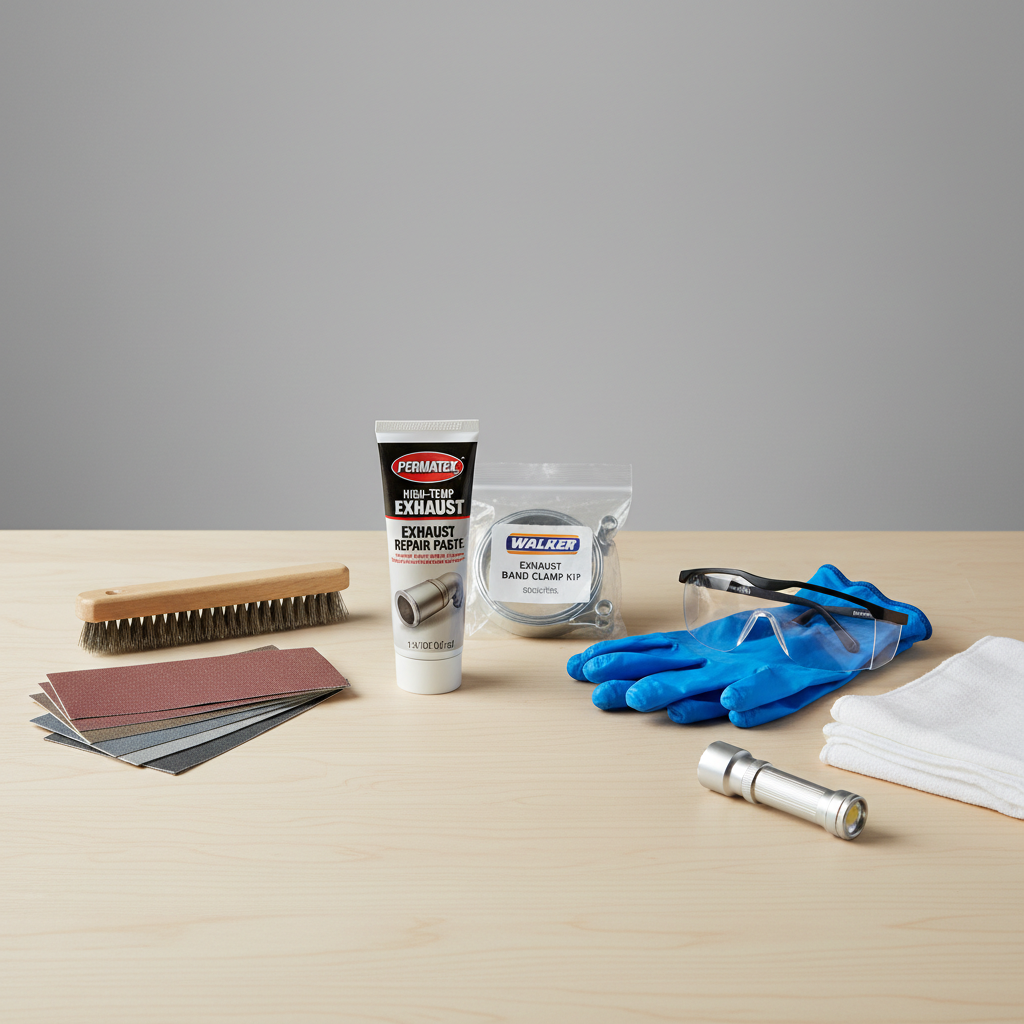
- Exhaust repair paste / muffler cement: A gritty, inorganic paste that cures hard with heat. Great for small gaps at slip joints and seams, not great for parts that flex a lot.
- High-temp RTV silicone (sensor-safe types): Flexible gasket maker. Works on some flanges if the joint is stable and clamped well, but many RTV products aren’t meant for direct exhaust stream exposure long-term.
- Wrap/bandage and clamp systems: A mechanical + composite approach. Often more durable than paste alone on a rusty pipe, because the clamp carries load.
- Epoxy-based exhaust repair products: Some kits use epoxy-like chemistry, usually paired with mesh. Can work on pinholes, but surface prep has to be obsessive.
According to the U.S. Environmental Protection Agency (EPA), vehicle exhaust contains pollutants that can affect air quality, and leaks can increase emissions. That’s a good reminder that sealing isn’t just about noise, it’s also about keeping gases where they belong.
Best Exhaust Pipe Sealants 2026: quick comparison table
Because brands and formulas change, the more reliable way to shop is by type and intended use. Use this table as a “pick your lane” filter before you compare specific products at your local parts store.
| Sealant type | Best for | Heat handling (typical) | Pros | Watch-outs |
|---|---|---|---|---|
| Exhaust repair paste (muffler cement) | Slip joints, seams, small gaps | High once fully cured | Cheap, easy, designed for exhaust | Can crack on flexing sections, hates oily surfaces |
| High-temp RTV (sensor-safe) | Flange “gasket-like” sealing with solid clamping | Moderate to high (varies by product) | Flexible, easy to apply, good for minor imperfections | May burn/erode in direct exhaust flow, cure time matters |
| Wrap/bandage + clamp kit | Rusty pipes, pinholes, temporary repair | High (depends on kit) | Mechanical support, often lasts longer than paste alone | Bulky, can trap moisture and speed rust on some pipes |
| Epoxy/mesh exhaust patch | Small holes away from extreme hotspots | Moderate to high (varies) | Strong when prepped well | Prep-sensitive, not ideal near engine or flex pipe |
How to tell if sealant will work on your leak (fast checklist)
Before hunting for the best car exhaust pipe sealant, spend two minutes confirming this is a sealant job, not a “replace the part” job. Many leaks are too big, too hot, or too mobile for any paste to survive.
- Location: If the leak is at a slip joint or muffler seam, sealant is often reasonable. If it’s at a flex pipe or a cracked manifold, sealant usually disappoints.
- Size: Hairline seep or small pinhole, maybe. A gap you can see clearly, usually no.
- Movement: If the joint shifts when you tug the pipe, expect cracking unless you add a clamp/band kit or fix the hangers.
- Rust: Flaky rust that keeps shedding means poor adhesion, plan on sanding back to solid metal or choose a clamp-style repair.
- Symptoms: Strong exhaust smell in cabin, louder under load, soot marks at joints all point to a leak. If you feel dizzy or get headaches, stop driving and have it inspected, exhaust exposure can be dangerous.
Choosing the right product type (by real-world scenario)
Here’s the practical way to choose without overthinking labels.
Scenario A: Leak at a slip joint (pipe-in-pipe connection)
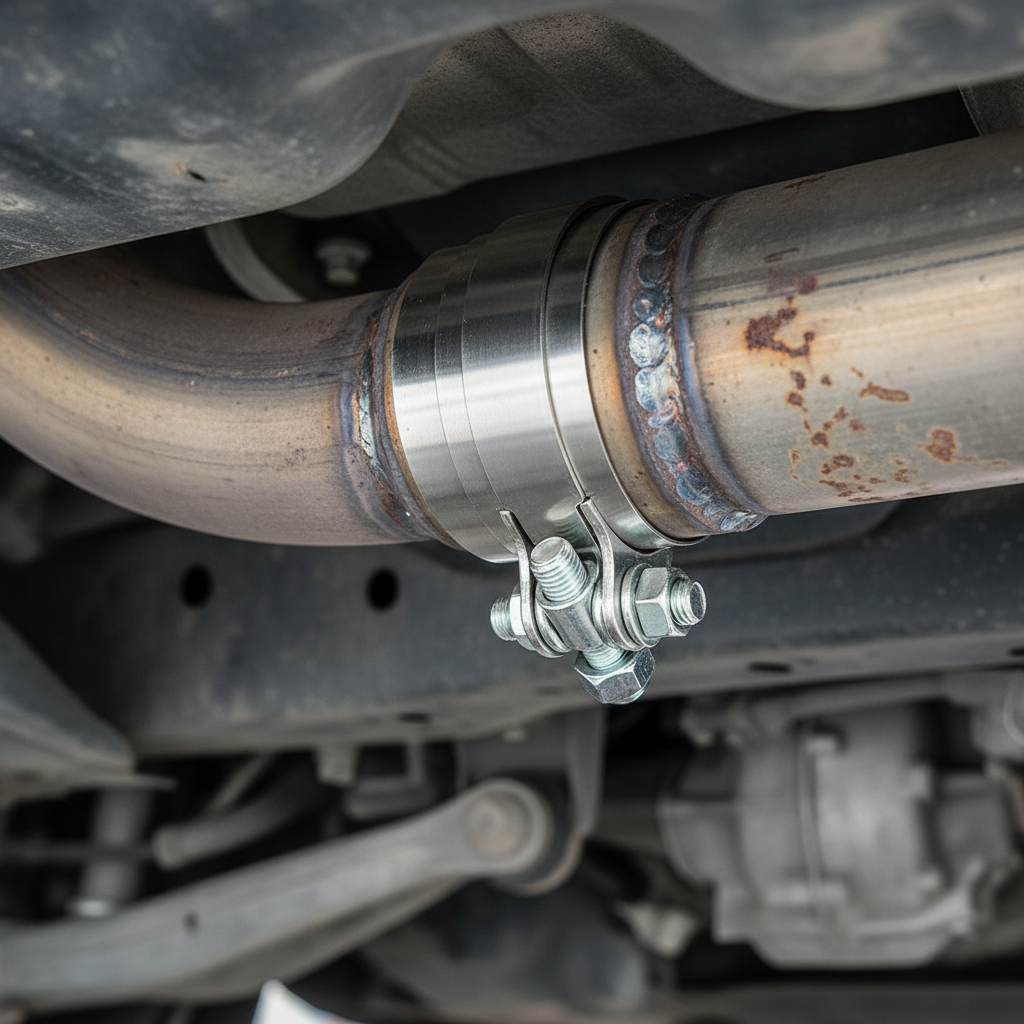
If the pipes still fit reasonably tight, exhaust repair paste plus a proper clamp is usually the most reliable combo. Paste fills imperfections, clamp supplies the force that keeps it sealed after heat cycles.
- Pick paste marketed for muffler/exhaust use, not general household cement.
- Add or replace the clamp if the original hardware is rusted thin.
Scenario B: Flange leak (two-bolt connection)
If the flange faces are pitted but still clamp evenly, a sensor-safe high-temp RTV can sometimes help as a thin film, but many times you really want a new gasket or better hardware. On older cars, warped flanges are common, and sealant becomes a band-aid.
- Use only a thin bead and allow full cure, otherwise it can blow out.
- Keep product away from O2 sensors and their wiring, and avoid smearing into the pipe.
Scenario C: Pinholes or a small crack on a rusty straight section
A wrap/bandage + clamp kit tends to beat paste alone here, because it bridges weak metal. If the pipe crunches when squeezed, replacement is often the only durable fix.
Scenario D: Near the engine (manifold/downpipe area)
This is where “best car exhaust pipe sealant” searches often go sideways. Temperatures and pressure pulses are harsher near the manifold, and a lot of consumer sealants won’t last. If the leak is upstream of the catalytic converter, it can also affect readings and drivability.
According to the U.S. Department of Energy, oxygen sensors help the engine run efficiently by measuring oxygen in the exhaust. Leaks upstream can skew readings, so if you have a check engine light plus a suspected leak, getting a proper diagnosis is usually worth it.
Step-by-step: applying exhaust sealant so it actually holds
The difference between a repair that lasts a week and one that lasts a season is mostly prep and curing. This is the part people rush.
- Work on a cold exhaust. Burns happen fast, and many products require a clean, cool surface.
- Clean aggressively: wire brush, then sand to solid metal. Wipe dust off. If the surface is oily, use an appropriate degreaser and let it fully dry.
- Dry-fit the joint: make sure the pipes actually seat correctly before adding any material.
- Apply the right amount: paste needs enough to fill gaps, RTV needs a thin controlled bead. Big globs don’t “seal better,” they tend to blow out.
- Clamp while wet: assemble and tighten hardware to spec if you have it. Even torque matters on flanges.
- Cure correctly: follow the label. Many pastes want heat to cure, many RTV products want time before heat. If you skip this, expect smoke and early failure.
- Heat-cycle check: after the first drive, recheck clamps once the system cools, metal expansion often loosens marginal hardware.
Common mistakes that waste time (and make leaks worse)
Some mistakes are just annoying, others can create safety issues.
- Sealing a moving joint: a flex pipe or a joint with broken hangers will keep moving until the seal cracks.
- Skipping clamp support: paste alone on a sloppy slip joint often fails because nothing holds the joint tight.
- Applying on flaky rust: you’re bonding to rust dust, not pipe. It looks fine, then falls off.
- Overusing RTV: excess can extrude into the flow path, then burn and crumble.
- Ignoring cabin smell: if fumes enter the vehicle, treat it as urgent. Ventilate, avoid long drives, and get help.
When to stop DIY and get a shop involved
Sealant is a tool, not a life plan. In a few cases, a professional inspection is the safer move.
- Leak near the manifold or you can hear it clearly in the engine bay, bolts may be seized and parts may be warped.
- Check engine light appears along with symptoms, you may be dealing with O2 sensor codes, catalyst efficiency issues, or a pre-cat leak.
- Visible structural rust: crushed pipe, missing brackets, or a muffler that sags will keep tearing repairs apart.
- Strong fumes in cabin or anyone feels unwell, it’s worth treating as a potential health risk and asking a qualified technician.
Conclusion: the “best” sealant is the one that matches your leak
The best car exhaust pipe sealant for most DIY repairs ends up being either an exhaust repair paste paired with solid clamping, or a wrap-and-clamp kit for rusty sections, because both approaches account for vibration and heat cycles. RTV has a place too, but mainly where the joint clamps evenly and the product is used sparingly and allowed to cure.
If you want one simple next step, crawl under (safely) and identify whether your leak is at a slip joint, flange, or a damaged pipe section, then buy the sealant type that fits that reality. If the leak sits near the engine or fumes reach the cabin, consider skipping the experiment and getting it inspected.
Key takeaways
- Match the sealant type to the leak location, not the marketing label.
- Prep and clamping often matter more than the brand name.
- Near-manifold leaks and cabin fumes deserve extra caution and often a pro look.
FAQ
What is the best car exhaust pipe sealant for a small leak at a joint?
For many small slip-joint leaks, exhaust repair paste plus a good clamp works well because the clamp provides constant pressure while the paste fills tiny gaps.
Can I use high-temp silicone RTV on an exhaust flange?
Sometimes, but it depends on how flat the flange faces are and how well the bolts clamp. If the flange is warped or hardware is weak, RTV tends to fail early, a proper gasket or repair is usually more reliable.
How long does exhaust sealant take to cure?
It varies by product. Many muffler cements cure with heat, while many RTV sealants need time before heat exposure. Follow the label closely, rushing cure time is a common reason repairs don’t last.
Is an exhaust leak dangerous if it’s “just a little loud”?
It can be. Some leaks stay outside the cabin and are mainly noise, but leaks that allow fumes into the vehicle may pose health risks. If you smell exhaust inside, it’s smart to stop driving and consult a professional.
Will exhaust wrap fixes be permanent?
Usually they’re more of a temporary-to-medium fix, especially on rusty metal. They can last longer than paste alone, but if the pipe metal is thin, replacement is often the durable solution.
Can exhaust sealant damage my O2 sensor or catalytic converter?
If sealant gets into the exhaust stream or contaminates sensor areas, it might cause issues. Keeping material out of the flow path and avoiding upstream sections when you’re unsure reduces risk, and a shop can advise for your specific layout.
How do I find the leak spot before sealing?
Soot trails near joints, a ticking sound on cold start, and feeling puffs of air near a seam can help. Avoid touching hot components, and if you’re uncertain, a smoke test at a muffler shop is often the fastest confirmation.
If you’re trying to pick a best car exhaust pipe sealant option without wasting a weekend, it usually helps to start with a quick photo of the leak area and identify whether it’s a slip joint, flange, or damaged pipe. If you’d rather keep it simple, choose a sealant type that pairs with a clamp, then focus on prep and cure time, that’s where most “it didn’t work” stories begin.