
How to test a car battery at home comes down to three things: checking voltage, checking how it behaves under load, and making sure the connections are not lying to you.
If your car cranks slow, needs a jump, or the headlights look a little sad at idle, you can usually learn a lot in 10–20 minutes with a basic multimeter. The nice part is you do not need a shop bay or expensive testers to get a solid answer on “battery vs alternator vs dirty terminals.”
Also, quick reality check: batteries can test “okay” one day and fail the next when a cell starts to go. This guide helps you get a practical, at-home diagnosis, not a magic guarantee.
What you need before you start (and what you can skip)
You can do a useful battery check with very little gear. Here is what actually matters.
- Digital multimeter (basic is fine): lets you read resting voltage and charging voltage.
- Safety glasses and gloves: batteries can vent gas and contain acid, so protect eyes and skin.
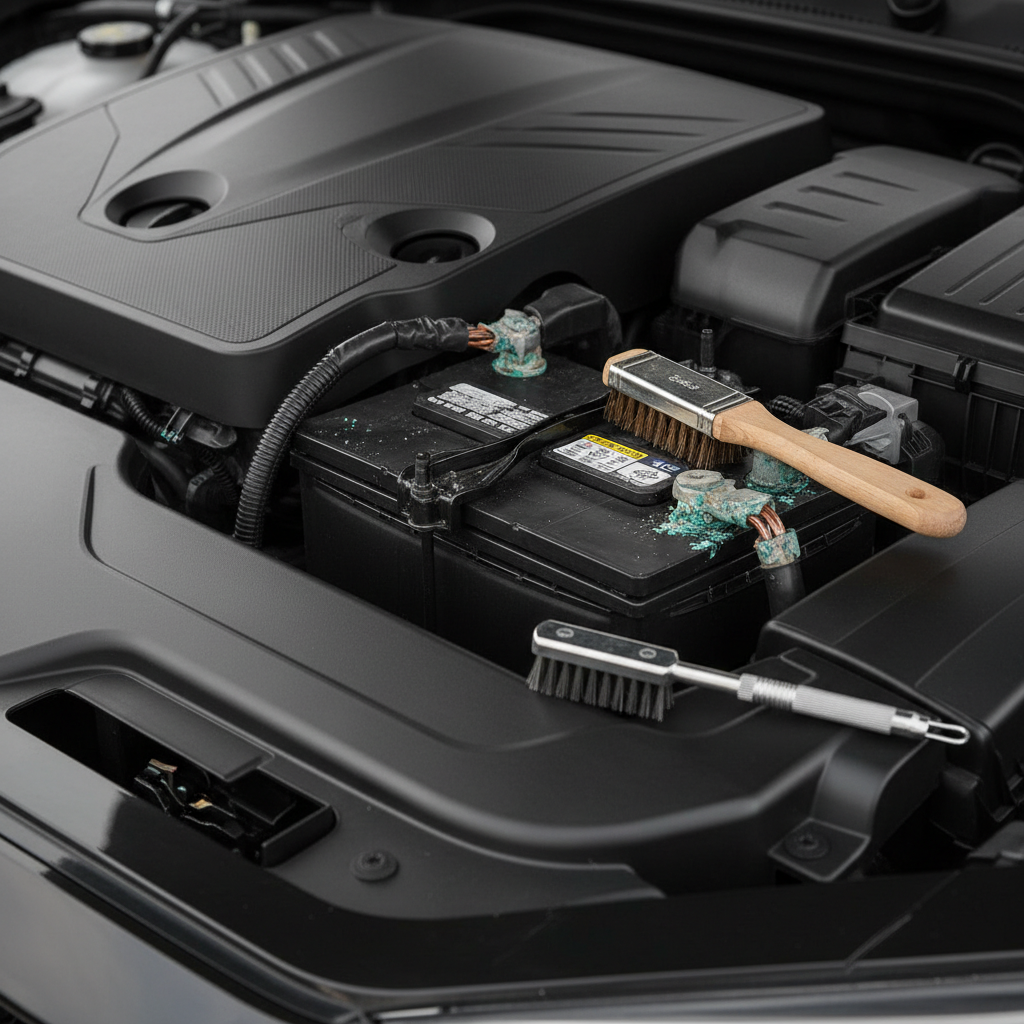
- Wire brush or terminal cleaner: corrosion can create false “bad battery” symptoms.
- Optional: a plug-in 12V load tester, or a smart battery charger with “test” mode.
You can skip fancy “battery health” gadgets if you already have a multimeter, most of the time you just need clean connections plus a couple voltage checks to make a good call.
Safety and setup: the small details that prevent dumb problems
Do this with the car in Park, parking brake on, and the engine off for the resting tests. If the battery sits under the rear seat or in the trunk, ventilate the area and keep sparks away.
- Do not smoke or create sparks near the battery.
- If you see a cracked case, bulging sides, or leaking fluid, stop and replace the battery or ask a shop to handle it.
- Check terminals: loose clamps can mimic a dead battery.
According to NHTSA, safe vehicle maintenance includes using proper protective equipment and avoiding hazards like sparks around flammable gases, which matters when working around lead-acid batteries.
Quick triage: is it the battery, connections, or charging system?
Before you measure anything, look and listen, this often saves time.
- Single click, no crank: could be weak battery, bad connection, or starter issue.
- Rapid clicking: commonly low battery voltage under load.
- Slow crank: battery aging, cold weather, or high resistance at terminals/grounds.
- Starts with a jump, then dies later: charging system may not be keeping up.
- Random electrical glitches: low system voltage or a bad ground can act weird.
If you have heavy white/blue corrosion at the terminals, deal with that first, it can change your test results.
Step-by-step: how to test battery voltage with a multimeter
This is the core home check. You are looking for a resting number that makes sense, and then a number that holds up when the car tries to start.
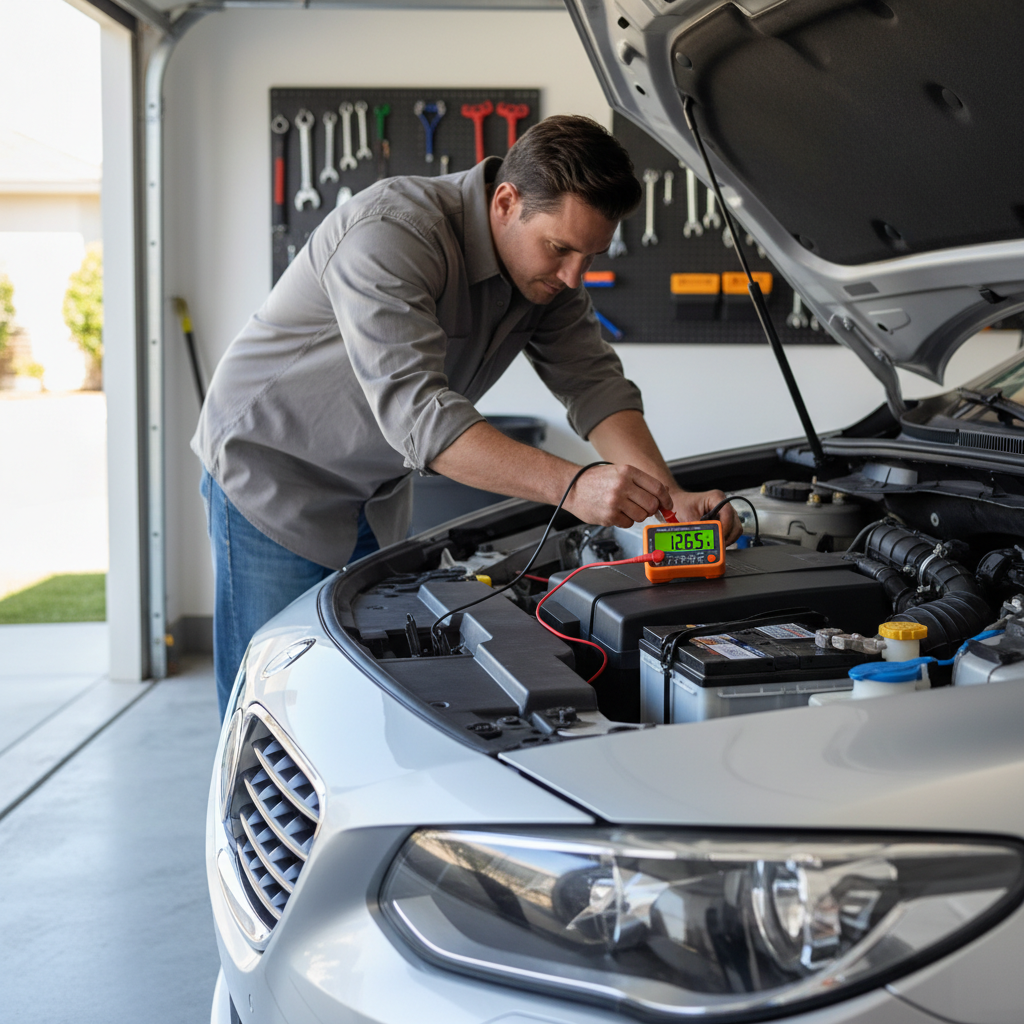
1) Resting voltage (engine off)
Turn the car off and let it sit 30 minutes if possible, longer is better. Set the multimeter to DC volts (20V range on many meters). Touch red probe to positive terminal, black probe to negative terminal.
- 12.6V–12.8V: typically fully charged for a healthy lead-acid battery.
- 12.4V: partially charged, might still start but margin is thinner.
- 12.2V or below: low charge or possible battery trouble.
According to Battery Council International (BCI), lead-acid batteries are sensitive to state of charge, and low charge can speed up sulfation, which makes the battery weaker over time.
2) Cranking voltage (while starting)
Keep the multimeter connected, have someone start the car while you watch the screen. You are looking for the lowest voltage during the crank.
- Stays above ~9.6V while cranking: often acceptable in many real-world conditions.
- Dips below ~9.6V quickly: battery may be weak, or there is high resistance in cables/grounds.
If your resting voltage looks fine but the cranking voltage collapses, that is a classic “looks charged, cannot deliver power” scenario, common with aging batteries.
3) Charging voltage (engine running)
With the engine idling, measure again at the terminals. Most alternators will charge in a fairly tight window.
- About 13.8V–14.7V: typical charging range for many vehicles.
- Below ~13.5V: may indicate weak alternator output, belt issues, or wiring problems.
- Above ~15.0V: could mean a voltage regulator issue, which can damage the battery over time.
Because designs vary by vehicle and temperature, treat these as practical ranges, if you are near the edge and symptoms match, confirm with a shop-grade test.
Interpreting results: a simple table you can use
If you only want the “what does it mean” view, use this cheat sheet. It is not perfect, but it is a strong start.
| What you see | What it often points to | What to do next |
|---|---|---|
| Resting 12.6V+, cranking stays above ~9.6V | Battery likely OK | Check for parasitic drain if it still dies overnight |
| Resting 12.2V or lower | Low charge or aging battery | Charge fully, retest after resting, then decide |
| Resting looks decent, cranking drops hard | Weak battery or high resistance connection | Clean/tighten terminals, check grounds, retest |
| Engine running voltage below ~13.5V | Possible charging issue | Inspect belt, consider alternator/charging diagnosis |
| Charging voltage above ~15.0V | Possible overcharging | Limit driving, get regulator/alternator checked soon |
Common reasons a “good” battery still fails at home
This is where people get frustrated, because the numbers can look “not terrible” yet the car still struggles. A few causes show up again and again.
- Dirty terminals or loose clamps: voltage exists, but it cannot flow well. Cleaning can change everything.
- Bad ground strap: especially common after engine work or in rust-belt states, resistance hides in plain sight.
- Short trips: the alternator may not have enough time to fully recharge, so the battery lives half-charged.
- Parasitic drain: a module stays awake, aftermarket accessories, or a trunk light, leading to overnight discharge.
- Temperature stress: cold reduces available cranking power, heat ages the battery faster.
Key point: state of charge is not the same as battery health. A fully charged old battery can still be weak under load.

Practical at-home fixes based on what you find
You do not need to replace a battery just because the car had one rough morning. Try the right fix for the symptom.
If resting voltage is low
- Use a smart charger, charge to full, then let the battery rest and retest.
- If it drops back down quickly without driving, suspect aging battery or parasitic draw.
If cranking voltage dips hard
- Clean the terminals and clamps, tighten snugly.
- Check the negative cable connection to the chassis and engine block.
- If cables feel hot after a start attempt, that can hint at resistance, ask a shop to do a voltage-drop test.
If charging voltage is out of range
- Check belt condition and tension if accessible and safe.
- Turn on headlights and rear defroster, watch if voltage sags heavily at idle.
- If numbers stay abnormal, schedule a charging system test soon, overcharging can shorten battery life.
Common mistakes to avoid (they waste time and money)
- Testing right after driving: surface charge can make voltage look healthier than it is, let it rest.
- Ignoring corrosion: you can “test” a connection problem all day and blame the battery.
- Replacing the battery without checking charging voltage: a weak alternator can kill a new battery surprisingly fast.
- Relying on the dashboard voltmeter alone: helpful trend tool, not a diagnostic instrument.
- Jump-starting repeatedly: it can be necessary, but repeated jumps sometimes point to a bigger issue that needs diagnosis.
When it is time to get a professional test
Home checks get you far, but a shop can run a true load test and charging system analysis with calibrated equipment. Consider professional help if any of these show up.
- Battery is under warranty and you want documented test results.
- Resting voltage looks fine but the car still needs frequent jumps.
- Charging voltage is high or low and you cannot tie it to a simple belt issue.
- You suspect parasitic draw and do not want to pull fuses and chase modules.
According to AAA, battery issues are a common reason for roadside assistance calls, and a proper diagnostic can prevent repeat no-start situations. If you are stranded or unsure, calling a professional is often the safer choice.
Key takeaways (save this before you close the hood)
- Resting voltage tells you charge level, not the full story on health.
- Cranking voltage is where weak batteries often reveal themselves.
- Charging voltage helps you avoid blaming the battery when the alternator is the real problem.
- Clean, tight terminals solve more “dead battery” complaints than people expect.
If you want one simple next step: charge the battery fully, let it rest, then retest resting and cranking voltage, that combo answers most home diagnosis questions.
Conclusion: a calm way to decide charge vs replace
When you know how to test a car battery at home, you stop guessing and start making clean decisions: charge if it is low, clean and tighten if the numbers do not match the symptoms, replace if voltage collapses under crank, and investigate the alternator if charging voltage looks wrong.
If your results land in a gray zone, that is normal, batteries do not always fail in a dramatic, obvious way. Take your readings, note the outside temperature, and if the problem repeats, get a proper load test so you are not buying parts out of frustration.
FAQ
How do I know if my car battery is bad or just discharged?
A discharged battery often shows low resting voltage and improves after a full charge, a bad one may charge up but still drop very low during cranking. If it will not hold charge over a day or two, aging or drain becomes more likely.
What voltage is too low to start a car?
Many cars struggle once resting voltage gets near the low 12s, and during cranking, a steep drop below roughly 9.6V often correlates with no-start behavior. Exact thresholds vary by vehicle and temperature.
Can I test a car battery without a multimeter?
You can get hints from headlight brightness or a charger display, but it is easy to misread. A basic multimeter is usually the cheapest tool that gives you numbers you can trust.
How long should I let the car sit before testing resting voltage?
Thirty minutes is workable for a quick check, but a few hours is cleaner if you want to reduce surface charge effects. If you just drove, you might see a slightly inflated reading.
Why does my battery test fine but the car still will not start?
Loose or corroded terminals, a weak ground strap, starter problems, or security/immobilizer issues can all mimic battery failure. If cranking voltage stays strong yet it will not crank, the problem may not be the battery.
What is a parasitic draw and how would I suspect it?
It is an abnormal electrical drain when the car is off, often seen as a battery that dies overnight or over a weekend. If your battery and alternator look okay on basic tests, a draw test might be the next step.
Should I replace the battery if it is more than 3 years old?
Age alone is not a verdict, but many batteries start losing margin after a few years, especially in heat or with lots of short trips. If your tests show weak cranking voltage, age becomes a strong supporting clue.
If you are doing these checks because you have unpredictable no-start mornings, and you would rather not troubleshoot in your driveway repeatedly, a quick battery-and-charging diagnostic at a trusted shop can be a time-saver and can confirm whether replacement makes sense.