
How to check oil level in car is a quick habit that can save you from expensive engine wear, and it usually takes less time than filling up at the pump.
Most people only think about oil when a warning light shows up, but by then you might already be running low or dealing with a leak. A simple check helps you spot problems early, and it also keeps you from overfilling, which can cause its own issues.
Below is a practical, no-drama walkthrough, plus a few “real life” scenarios that trip people up, like checking on a slope, reading a smeared dipstick, or dealing with a car that has an electronic oil monitor.
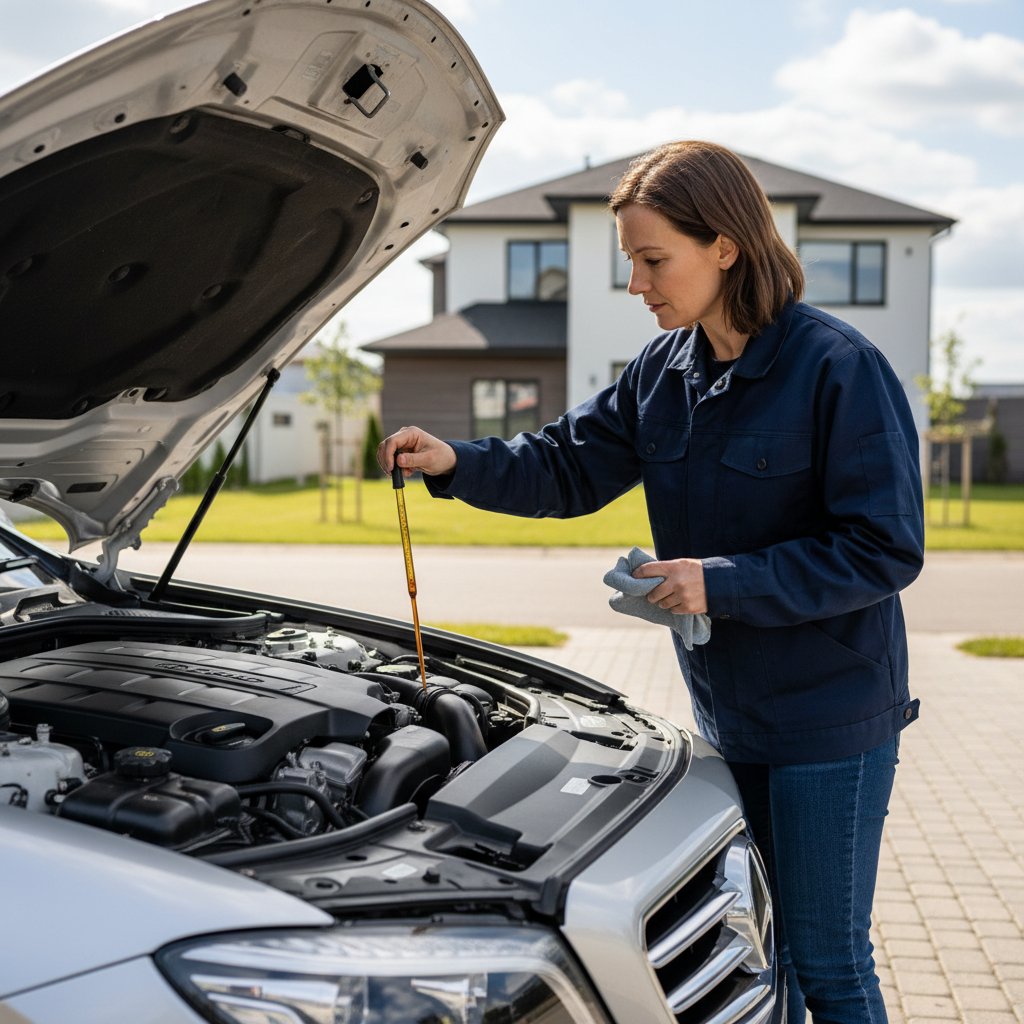
What you need before you check
You do not need a full tool kit. You need the right conditions so the reading means something.
- Level ground, because oil pools to one side on a slope and the dipstick lies.
- A clean rag or paper towel to wipe the dipstick.
- Good light, a phone flashlight works fine.
- Your owner’s manual if you are unsure whether your car uses a dipstick or an electronic measurement.
According to NHTSA, dashboard warning lights signal specific vehicle conditions and should not be ignored. Treat the oil pressure light as urgent, and do not rely on it as your routine “oil level checker.”
Step-by-step: checking oil with a dipstick (most cars)
If your vehicle has a dipstick, this is the most straightforward way to verify the level. The only trick is consistency.
1) Park and give the oil time to settle
Park on flat ground, shut the engine off, and wait a few minutes. Many owner’s manuals suggest checking when the engine is warm but off, after a short wait, though the exact timing can vary by model.
2) Find the dipstick and pull it out
The dipstick handle often has a bright color. Pull it out, wipe it clean, then insert it fully back into the tube.
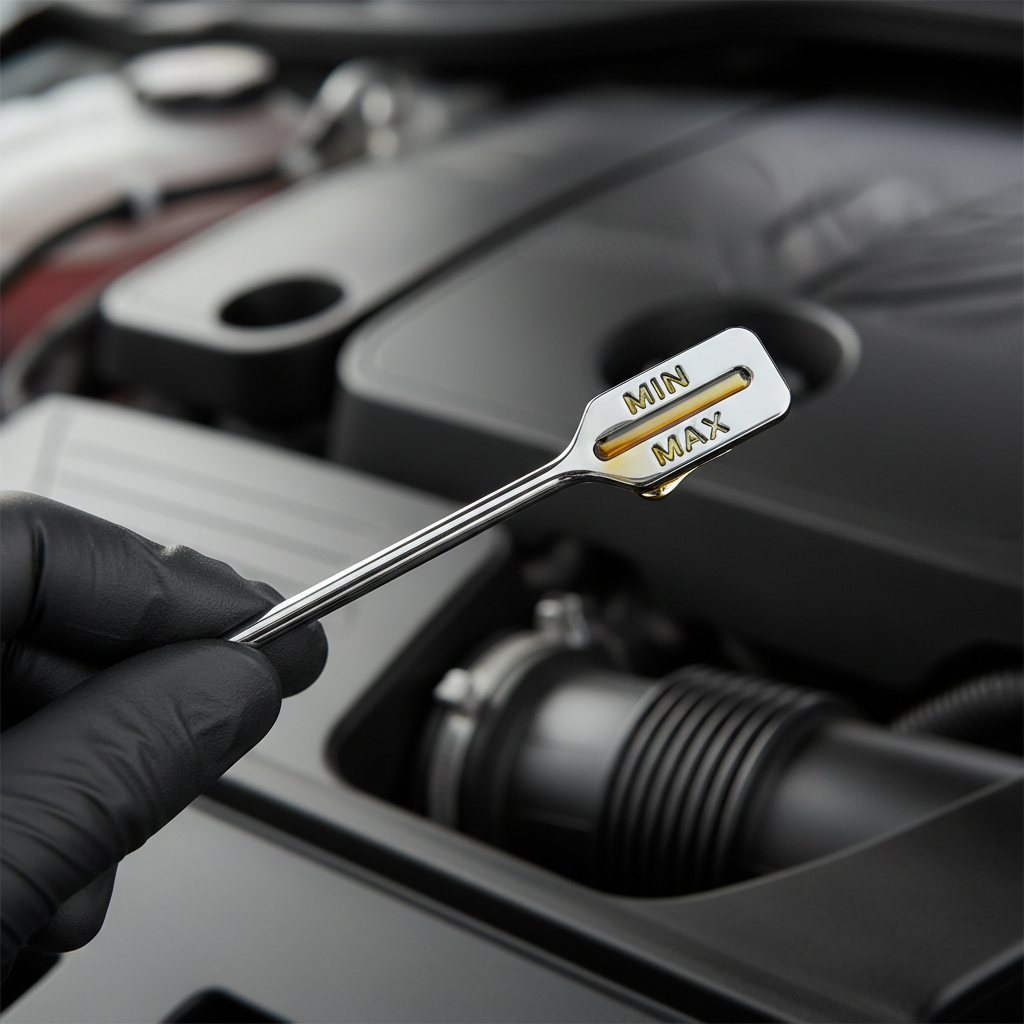
3) Pull it again and read the level
Look at the oil film on the end of the dipstick. Most dipsticks have two marks, holes, or a cross-hatched area that indicates an acceptable range.
- Between MIN and MAX (or within the cross-hatch): usually OK.
- Near MIN: plan to top off soon.
- Below MIN: add oil before driving far, and consider why it is low.
If the oil streak looks smeared or hard to read, wipe and repeat. It happens a lot, especially if you do the first pull without wiping.
Warm vs. cold checks: which one should you trust?
This is where people get conflicting advice. In many cases, either method works if you stay consistent and follow the manual’s guidance for your car.
- Warm check (after driving, then waiting a few minutes): often reflects how the engine normally operates, and oil is more fluid.
- Cold check (before first start of the day): oil has fully drained back to the pan, which can make the reading steadier for some vehicles.
What matters is avoiding “half-and-half,” like checking immediately after shutting the engine off, when oil is still distributed throughout the engine. That reading can look low even when it is not.
Quick diagnosis: what your oil level is trying to tell you
Oil level is not just a number on a stick, it is also a clue about consumption, leaks, or a sloppy refill.
| What you see | What it may mean | What to do next |
|---|---|---|
| Level slightly below MAX | Normal variation | Recheck in 1–2 weeks or at the next fuel fill |
| Near MIN but not below | Normal use, or early sign of consumption | Top off soon, watch how fast it drops |
| Below MIN | Possible leak or higher-than-normal consumption | Add oil, check for drips, schedule an inspection if it returns |
| Above MAX | Overfill, fuel dilution, or incorrect reading | Recheck on level ground, consider service to remove excess |
| Milky or frothy appearance | Moisture contamination, possible coolant mixing | Avoid driving far, consult a professional mechanic |
According to AAA, keeping up with routine maintenance checks helps reduce the chance of breakdowns. Oil level is one of the simplest checks you can do without tools.
How to top off safely (without overfilling)
When the dipstick shows low, topping off is usually simple, but go slow. Overfilling can cause foaming and increased crankcase pressure, and in some situations that can lead to leaks or drivability issues.
Use the right oil
Check the oil cap or owner’s manual for viscosity and specification. “5W-20” and “0W-20” are not interchangeable in every engine, and some cars require a specific standard.
Add in small amounts, then recheck
- Turn the engine off.
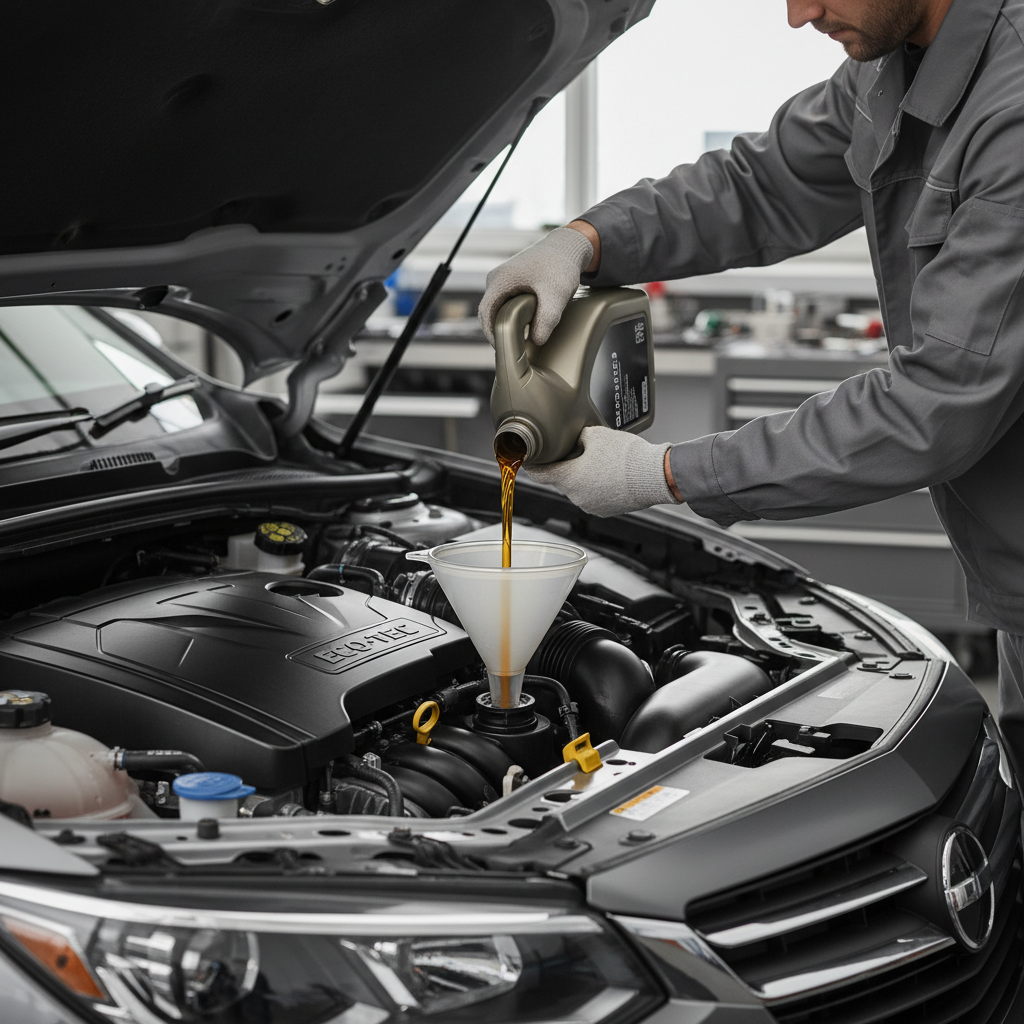
- Remove the oil fill cap.
- Add a small amount, many people start with about half a quart, but your engine might need less.
- Wait a minute, then recheck the dipstick.
Key point: the space between MIN and MAX often represents about 1 quart, but it varies by engine. If you are unsure, add less and remeasure.
Self-check checklist: are you getting a trustworthy reading?
If your numbers seem inconsistent, it is often the process, not the car. Use this quick checklist before assuming you have a problem.
- Car parked on flat ground
- Engine off, waited a few minutes (or checked cold consistently)
- Dipstick wiped clean on the first pull
- Dipstick fully inserted before the reading pull
- Reading taken from the correct side of the stick, some smear on one side
- Same routine each time, so trends make sense
If you can repeat the steps and still see big swings, that is when it becomes worth looking for leaks, smoke, or unusual smells.
Common mistakes that waste time (or create new problems)
A few habits cause most “my oil looks low” panic.
- Checking right after shutting the engine off, then topping off aggressively. The follow-up check later shows “too high.”
- Reading on a slope, especially curbside parking. Even a small tilt can change the dipstick line.
- Confusing oil level with oil life. Oil life monitors estimate service intervals, they do not directly measure how much oil is in the engine.
- Mixing random oil types. In a pinch, topping off with the correct viscosity usually matters more than brand, but long-term you want to stick with the spec your engine calls for.
According to EPA, proper maintenance supports emissions performance over time. It is not just about avoiding breakdowns, it also helps the vehicle run as intended.
When to stop guessing and get professional help
Some situations are “check it again,” others are “do not keep driving and hope.” If any of these show up, a mechanic’s inspection is a safer next step.
- Oil pressure warning light comes on while driving
- Oil level drops quickly between checks, even after topping off
- Visible leaks under the car, or oil around the filter or drain plug
- Milky oil, sweet smell, overheating, or coolant level dropping
- Engine noise like ticking or knocking that appears with low oil
If you are unsure whether it is safe to drive, it is reasonable to consult a qualified technician or roadside assistance. Towing can feel annoying, but an engine replacement feels worse.
Conclusion: a simple routine that pays off
Once you learn how to check oil level in car the right way, it becomes a fast routine: park level, wait a bit, wipe, dip, read, and only add what you actually need.
Your next move is simple: pick one consistent time to check, many drivers do it every couple of fuel fills, and keep a quart of the correct oil in the trunk so topping off never turns into an emergency.