
How to clean car interior windows without streaks usually comes down to three things: the right cleaner, the right towel, and a technique that does not redeposit grime across the glass.
If you have ever finished wiping and then noticed a cloudy film the moment sunlight hits the windshield, you are not alone. Interior glass collects off-gassing residue from plastics, fingerprints, smoker or vape film, and even “invisible” dust that turns into streaks once it gets damp.
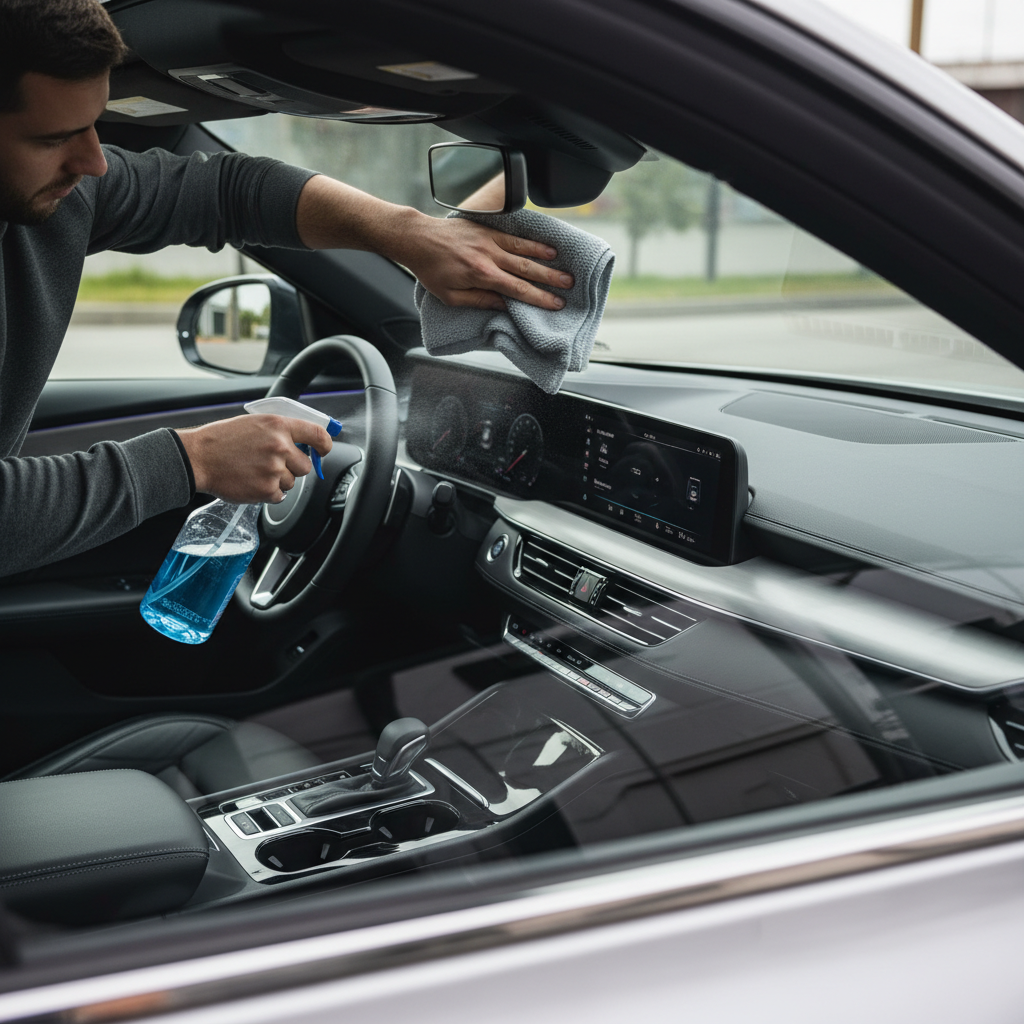
This guide keeps it practical: why streaks happen, a quick self-check to figure out what type of residue you have, and a step-by-step method you can repeat. You will also get a troubleshooting table for the stubborn “why does it still look hazy?” moments.
Why interior windows streak (and why it feels worse than exterior glass)
Interior glass is a different job than the outside. It rarely has road grit, but it often has oily contamination that loves to smear.
- Dashboard off-gassing film: Plastics and vinyl can release a light oily layer, especially in heat. That layer grabs dust and creates a gray haze.
- Too much product: Overspraying cleaner is a classic mistake, excess liquid dissolves grime and then dries back as streaks.
- Wrong towel: Fabric softener residue, low-pile towels, or paper towels can drag lint and leave trails.
- Temperature and sun: Cleaner flashes quickly on warm glass, so you wipe a half-dry surface and create smears.
- Contaminated wiper film: The windshield interior can show “bands” that mimic exterior wiper marks, but it is often a mix of interior film and cleaner residue.
According to the National Highway Traffic Safety Administration (NHTSA), maintaining clear visibility is essential for safe driving. Streak-free interior glass is not just cosmetic, it can reduce glare and help you see better at night.
Quick self-check: what kind of mess are you wiping?
Before you change products, do a 30-second check. It saves time because the fix depends on what is actually on the glass.
- Smears that feel slick when you rub a clean finger on the glass: usually oily film or interior protectant overspray.
- Patchy haze only in sunlight: commonly cleaner residue or a towel that is not truly clean.
- Dots and “freckling”: often spittle from talking/coughing, kid prints, or fine mist from sprays.
- Uniform gray layer that returns quickly: often off-gassing plus dust, sometimes smoking/vaping residue.
If you suspect nicotine or vape film, expect to do at least two passes. That residue tends to dissolve, move around, then redeposit unless you swap towels.
Tools and products that actually help (and what to skip)
You do not need a cabinet of detailing chemicals, but you do need clean tools. If your towel is dirty, you can do everything “right” and still get streaks.
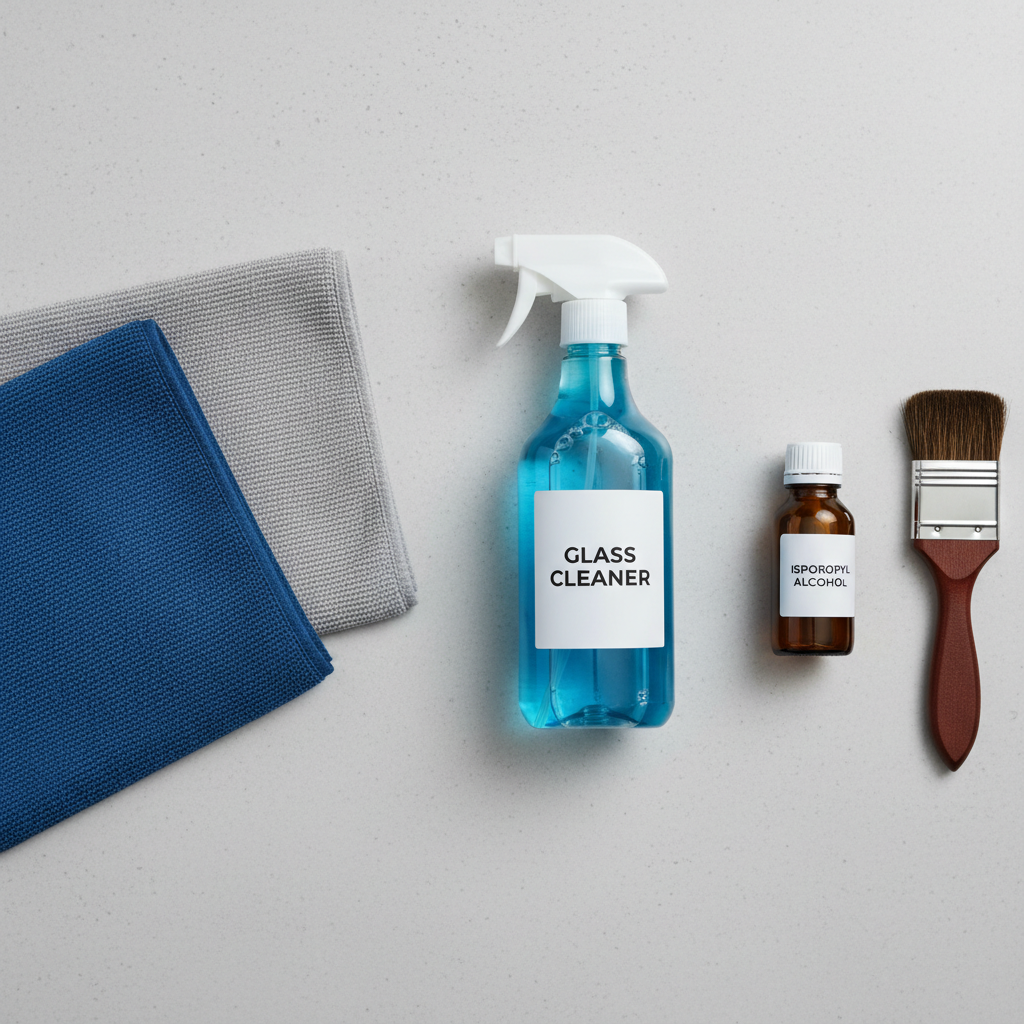
Recommended basics
- 2–4 clean microfiber glass towels: waffle-weave or short-pile “glass” microfiber works well.
- Alcohol-based glass cleaner or a diluted isopropyl alcohol mix for oily film (avoid oversaturation).
- Optional: distilled water for a final lightly damp wipe if your area has hard water.
- Nitrile gloves (optional): keeps skin oils off the towel and glass.
Things that often cause problems
- Paper towels: they can lint and smear oily film, some also contain binders that leave residue.
- Household ammonia on tinted windows: many tint films can be sensitive, product labels vary, so check your tint installer guidance if you have aftermarket tint.
- One towel for the whole car: once a towel loads up, you are spreading grime.
Step-by-step: how to clean interior windows with no streaks
This method aims to remove film first, then polish the glass dry. The “two towel” idea is the part most people skip, and it is usually the whole difference.
1) Prep the cabin so you are not fighting dust
- Park in shade or a garage if possible, cool glass buys you time.
- Crack doors for airflow, interior humidity can slow drying and invite smears.
- Quickly dust the dashboard edge and defrost vents, loose dust tends to land on the glass mid-wipe.
2) Spray the towel, not the glass (most of the time)
- Lightly mist your cleaning towel, do not soak it.
- For tight areas, a tiny spray directly on the glass is fine, but keep it controlled to avoid drips into electronics or trim seams.
3) Wipe to lift contamination, then immediately buff dry
- Use the first towel for the “wet” pass: overlapping strokes, moderate pressure.
- Flip to a dry side if it starts to drag.
- Use a second towel for the “dry” pass: faster, lighter pressure, like you are polishing.
4) Use a crosshatch pattern so you can see what you missed
- Wipe the windshield interior horizontally on the wet pass.
- Buff vertically on the dry pass.
- If a streak remains, you will know which pass caused it.
5) Don’t forget the edges and top band
The top of the windshield and the outer edges near the A-pillars hold a lot of film. A simple trick is wrapping your microfiber around a foam applicator or a soft squeegee handle to reach the corners without scraping trim.
Streak troubleshooting table (fast fixes)
When the glass looks worse after “cleaning,” it is usually one of these patterns.
| What you see | Likely cause | What to do next |
|---|---|---|
| Cloudy haze in sunlight | Cleaner residue or towel residue | Buff with a fresh dry microfiber, then do a very light damp pass with distilled water and rebuff |
| Greasy smears that “move around” | Oily film from off-gassing or protectant overspray | Use an alcohol-based cleaner sparingly, swap towels often, do two full cycles |
| Lint trails | Towel not suited for glass or washed with softener | Switch to dedicated glass microfiber, wash without fabric softener, dry low heat |
| Streaks that show at night with headlights | Incomplete dry buff or film left behind | Rebuff dry, then inspect from multiple angles, repeat only where needed |
| Drips from top edge | Overspray on windshield | Spray the towel instead, start at the top with a barely damp towel and chase drips immediately |
Special scenarios: smokers, tinted windows, and winter film
Cars with smoke or vape residue
This is where people burn through time. The glass can look clean, then fog up again as soon as it warms. Plan for repeated towel changes, because your towel loads up fast.
- Do a first pass to remove the bulk film, do not chase perfection.
- Switch to a fresh towel and repeat with less product.
- Finish with a dry buff, then inspect from outside the car looking in.
Aftermarket tinted side windows
Many tint films tolerate normal automotive glass cleaners, but some prefer ammonia-free products. If you are unsure what was installed, play it safe and choose a tint-safe cleaner, and avoid scraping with anything stiff.
Winter interior film and defroster use
Heavy heater use and wet boots can raise interior humidity, which makes film more obvious. If you constantly fight fogging, check your cabin air filter and consider using the A/C function while defrosting, many vehicles use it to dry air. For persistent fogging that affects safety, a mechanic can help rule out leaks or HVAC issues.
Key takeaways for a truly streak-free finish
- Use two towels: one to clean, one to buff, this alone fixes most streak complaints.
- Less liquid wins: overspray creates drips and residue, especially on warm glass.
- Change towels early: once it feels damp and slick, it is spreading film.
- Inspect from multiple angles: what looks fine head-on can show haze from the side.
Practical routine you can repeat in 10 minutes
If you want a simple rhythm that keeps interior glass under control, do this every few weeks, more often if you park in heat or drive with kids or pets.
- Light dusting around the dash and vents
- One light wet pass with a dedicated glass microfiber
- Immediate dry buff with a second towel
- Quick spot clean for fingerprints on side windows
That routine also reduces the “mystery glare” that shows up at night. It is boring, but it works.
FAQ
What is the best way on how to clean car interior windows without streaks?
Use a low-overspray approach and a two-towel method: one towel to lift film with a small amount of cleaner, a second towel to buff completely dry. Most streaks are leftover residue, not “dirty glass.”
Should I use vinegar to clean the inside of car windows?
Vinegar can cut light haze in some cases, but the smell and potential trim sensitivity make many people prefer an automotive glass cleaner. If you try it, use a very diluted mix and keep it off leather and electronics.
Why do my windows look streaky only when the sun hits them?
That usually points to cleaner residue or an oily film that was spread thin instead of removed. Rebuff with a clean dry microfiber, then do a lighter wet pass and immediately dry.
Can I use Windex on car interior glass?
Some people do, but if you have aftermarket tint, many installers recommend ammonia-free products. Check the label and your tint guidance, and when in doubt, choose a tint-safe automotive glass cleaner.
What towels work best for interior windshield cleaning?
Dedicated microfiber made for glass, usually waffle-weave or short-pile, tends to leave fewer lint trails. The bigger issue is cleanliness: towels washed with fabric softener often smear.
How do I clean the inside of the windshield without hurting the dashboard?
Spray the towel instead of the glass, and place a small dry towel along the base of the windshield to catch any accidental drips. Avoid letting liquid run into vents or seams.
My car fogs up easily, will cleaning interior windows help?
Often yes, because film gives moisture something to cling to, making fog look worse. If fogging stays severe, it can be worth having a shop check the cabin air filter, HVAC operation, or possible water leaks.
Final thoughts
Clean interior glass is one of those small jobs that pays back every time you drive into low sun or face oncoming headlights. If you try the two-towel method with minimal product and still struggle, focus on towel cleanliness and oily film removal, those are the usual culprits. Grab two fresh microfibers today, do one careful windshield pass in the shade, and you will almost always see the difference on your next night drive.