
Best car air purifiers for pet hair usually aren’t “stronger fans”, they’re units that can trap tiny dander particles without turning your cabin into a noisy wind tunnel.
If you drive with a dog or cat, you’ve probably noticed the pattern, hair shows up on seats fast, but the sneezing, itchy eyes, and that lingering “pet” smell can stick around even after you vacuum. That’s because hair is the visible part, while dander and fine dust stay airborne and recirculate through your vents.
This guide helps you choose a purifier that fits a real car cabin, not a living room, how to tell which filter specs matter, and what to do if your issue is more “hair everywhere” than “allergies acting up.”
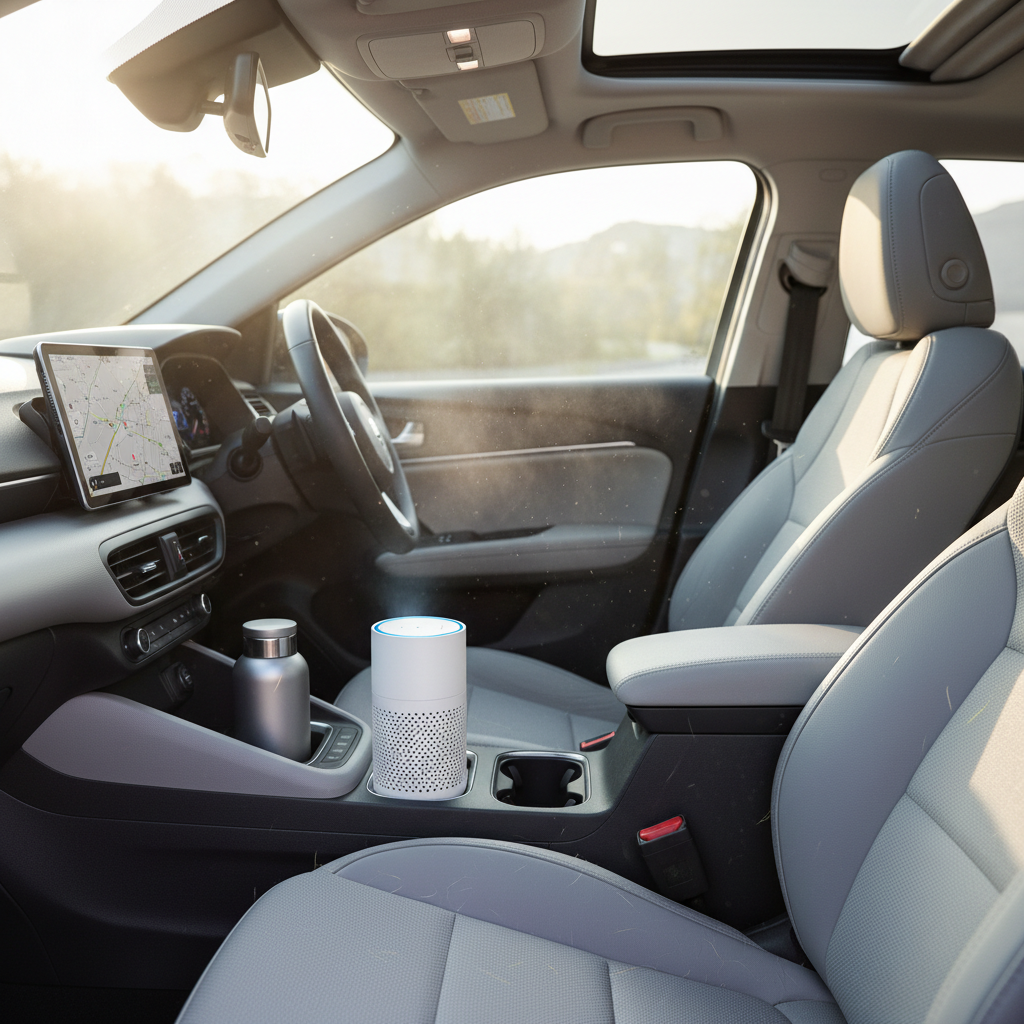
What actually works in a car (and what’s mostly marketing)
In a vehicle, you’re dealing with a small, enclosed space, frequent door openings, and a lot of vibration. So the “best” choice is usually the one that’s stable, correctly sized, and uses the right filtration method.
- HEPA-style particle filtration: The most relevant for dander and fine particulate. True HEPA is ideal, but many car units use “HEPA-type” filters that can still help, just expect performance to vary by brand.
- Activated carbon: Helpful for odors (wet dog smell, litter odor on fabrics). Carbon won’t solve allergies alone, but it can make rides feel fresher.
- Ionizers/ozone “fresheners”: Be cautious. Some devices generate ozone intentionally or as a byproduct. According to U.S. Environmental Protection Agency (EPA), ozone can irritate airways and is not a safe “cleaning” approach for occupied spaces.
- UV lights: Often included as a feature, but in a small portable unit the real-world benefit can be limited unless airflow and exposure time are designed well. I treat UV as “nice to have,” not the reason to buy.
One more reality check, a purifier can reduce airborne particles, but it won’t pick hair out of fabric like a brush or rubber tool. If your main complaint is hair stuck in seats, you’ll want a two-part plan.
Quick self-check: are you fighting hair, dander, odors, or all three?
People buy the wrong purifier because they mislabel the problem. This quick checklist helps you choose faster.
- Mostly hair on seats and floor mats: You need better mechanical removal (vacuum + pet hair tools). A purifier can help with the “floaty” stuff but won’t replace cleaning.
- Sneezing, watery eyes, throat irritation during drives: Likely dander + fine dust in recirculating air. Prioritize HEPA/particle performance and placement near breathing zone.
- “Dog smell” even after cleaning: Look for meaningful carbon and consider cleaning fabric sources (seat covers, cargo liner).
- Foggy film on windows: Often cabin VOCs and residue; carbon can help a bit, but wiping and replacing cabin air filter usually matters more.
If you have asthma or significant allergy symptoms, it may be worth checking with a clinician, especially if symptoms spike in the car. A purifier is a tool, not a diagnosis.
Key buying criteria for the best car air purifiers for pet hair
Specs get confusing fast, so here are the criteria that tend to matter in real use.
1) Filter type and replacement reality
Start with a particle filter and confirm replacements are easy to buy. If filters are always out of stock or cost nearly as much as the unit, the purifier becomes a paperweight.
- Look for sealed filter frames to reduce bypass leakage.
- If odors bug you, choose a unit with activated carbon (not just “carbon-coated”).
- Avoid units that hide filter details behind vague language.
2) CADR and coverage claims (interpret carefully)
CADR (Clean Air Delivery Rate) is useful, but many small car purifiers don’t publish standardized CADR. When brands only list “coverage area,” treat it as a rough hint, not a promise. For cars, you want noticeable airflow without excessive noise.
3) Power and placement
USB-powered is convenient, 12V can be stronger. Either way, pick a design that won’t tip during braking, and won’t block airbags or vents. A stable cup-holder cylinder or seat-back mounting style tends to work best.
4) Noise on long drives
Most people end up running car purifiers on the middle setting because “max” gets annoying. A unit that’s slightly weaker but tolerable for two hours often beats a powerhouse you shut off after five minutes.
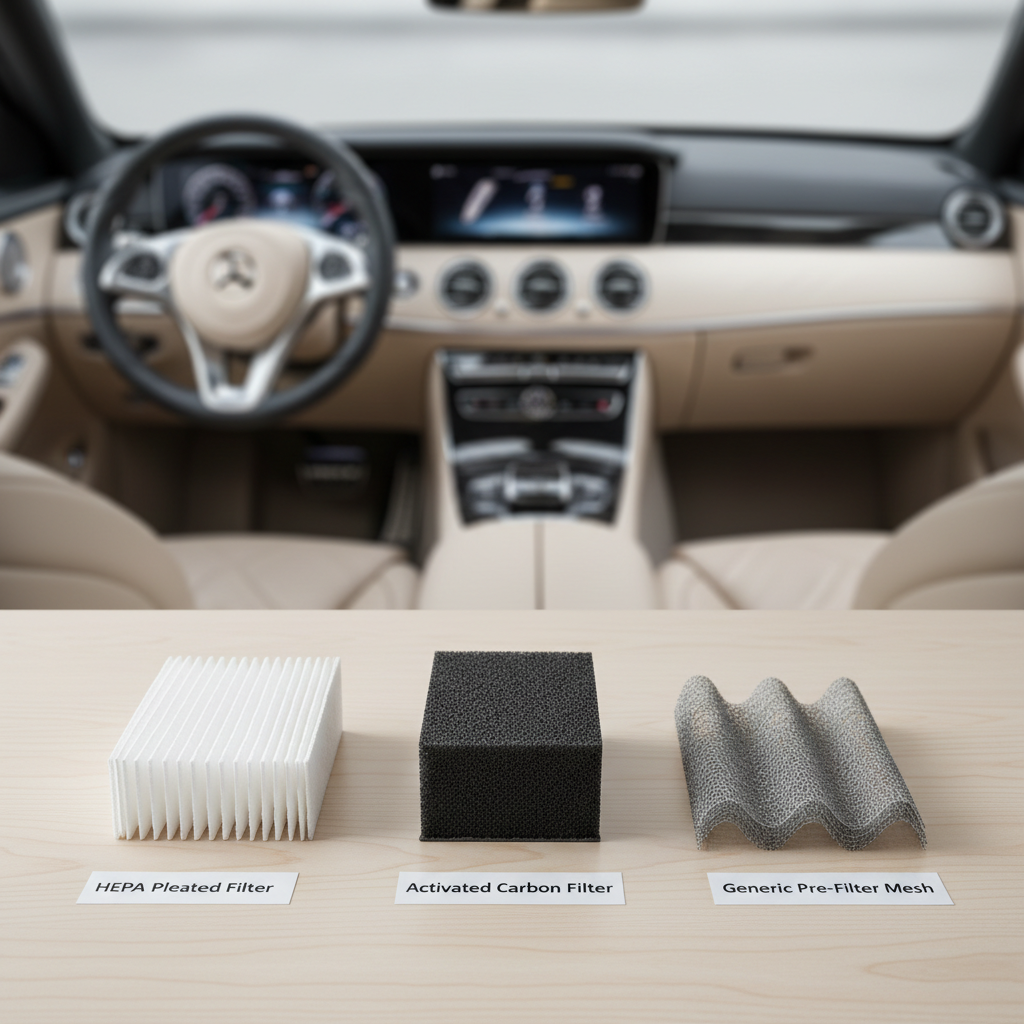
Comparison table: which purifier style fits your situation?
There’s no single winner for everyone, so use this as a practical matchmaker.
| Type | Best for | Pros | Watch-outs |
|---|---|---|---|
| True HEPA + carbon (compact) | Dander + odor combo | Balanced filtration, noticeable freshness | Filter costs vary, may need more frequent changes with pets |
| HEPA-type only | Light allergies, basic dust | Often cheaper, low power draw | Odor control limited, performance depends on build quality |
| Vent-mounted mini purifier | Targeting driver breathing zone | Convenient placement, minimal footprint | Can restrict vent airflow, small filter surface loads fast |
| “Ion” air freshener style | People seeking scent reduction only | Small, simple | May create ozone, limited particle removal; not ideal for dander |
How to set up a car purifier so it actually reduces pet dander
Placement and routine matter more than people expect. A good unit used poorly feels like it “does nothing.”
Placement that usually works
- Front cup holder or center console: Good airflow to both rows, stable position.
- Rear seat area if pets ride in back: Helps intercept particles closer to the source, especially on longer drives.
- Avoid the floor unless the unit is designed for it, hair and debris can clog intakes quickly.
Run-time strategy
- Turn it on 5–10 minutes before loading the pet if you can, it helps “pre-clean” the cabin air.
- Use a higher setting for the first 10–15 minutes, then drop to a comfortable level for the rest of the drive.
- If your car has recirculation, many drivers find recirculate + purifier helpful for allergies, but if odors build up, switching to fresh air periodically can feel better.
Don’t ignore the cabin air filter
Your car already has an HVAC filter. If it’s old or basic, it can undermine everything. According to CDC, improving ventilation and filtration can reduce airborne particles indoors; the same logic generally applies in a vehicle cabin, within reason. A higher-quality cabin filter (often labeled “HEPA” or “high-efficiency,” depending on the automaker) can be a meaningful upgrade.
A realistic 15-minute routine to cut hair + dander (no deep detail)
If you want noticeable change, pair the purifier with fast cleaning habits that match how pet mess behaves in cars.
- Before the trip: Use a lint roller or rubber pet hair brush on seats where the pet sits, it takes two minutes and prevents hair from turning airborne later.
- During the trip: Run the purifier near the pet zone, keep windows mostly closed if pollen is a problem in your area.
- After the trip: Shake out a washable seat cover or hammock, wipe hard surfaces with a damp microfiber cloth, then run the purifier for a few minutes with doors closed.
This combo approach is what most people mean when they say “my car finally feels clean,” it’s not one magic device, it’s friction removed from doing the basics.
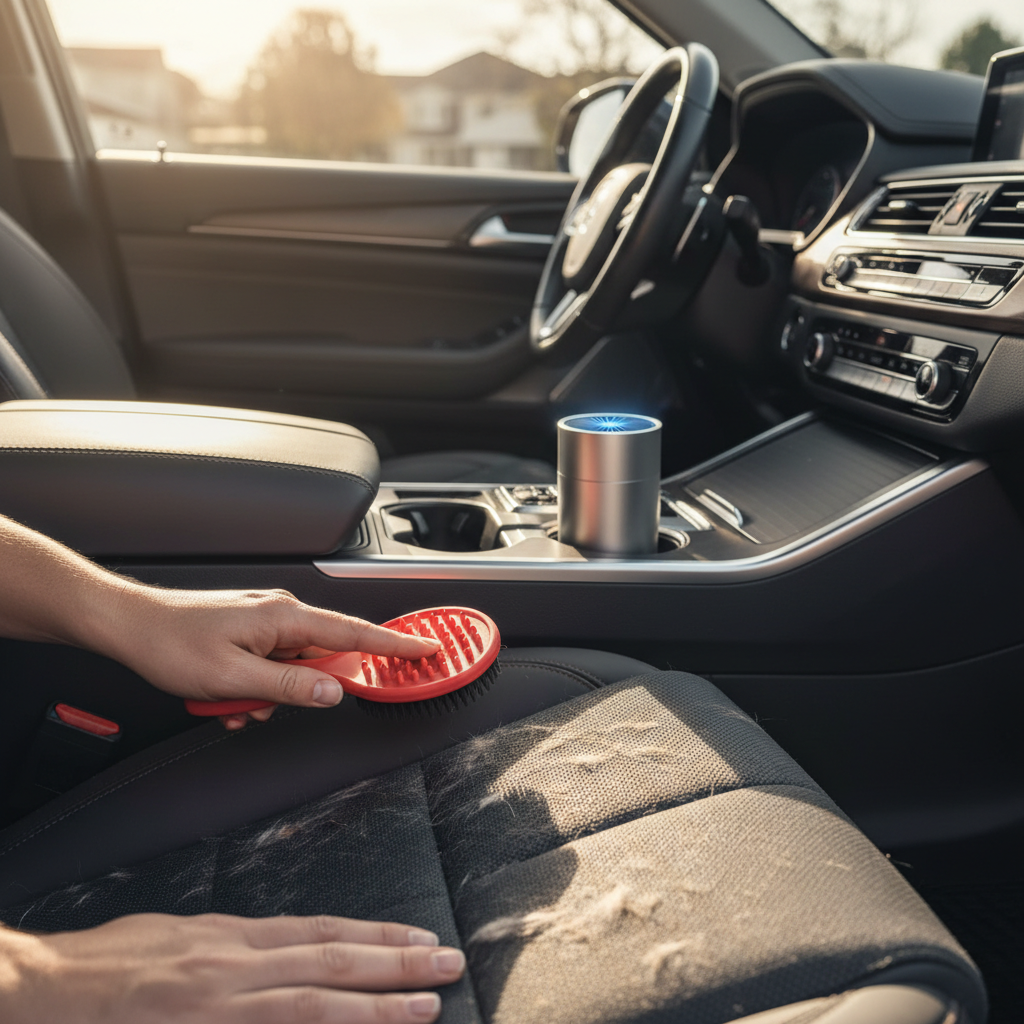
Common mistakes that make a “good” purifier feel useless
- Buying for hair, not for particles: Hair clumps won’t get sucked in like a vacuum. Target dander and fine dust, handle hair with tools.
- Ignoring filter maintenance: Pet households load filters faster. If airflow drops, performance usually drops with it.
- Blocking the intake: Tossing a jacket against the unit, placing it on the floor, or wedging it near a seat can choke airflow.
- Over-trusting “fresh scent”: Strong fragrance can mask odor while irritating sensitive noses. If you’re allergy-prone, unscented often feels better.
- Using ozone-style devices: If a product hints at ozone for “purification,” reconsider. According to EPA, ozone can be harmful to breathe, especially for people with respiratory conditions.
When it’s worth getting extra help (or changing your approach)
If symptoms persist even after upgrading filtration and cleaning, the issue might be bigger than pet dander alone, for example moldy cabin filters, water intrusion, or severe seasonal allergies. If you notice wheezing, chest tightness, or significant shortness of breath during drives, it’s smart to talk with a healthcare professional.
And if the car itself smells “musty” no matter what you do, a mechanic or detailing shop can check for trapped moisture, HVAC drain issues, or old filters. Sometimes the fix is boring, but effective.
Key takeaways and a simple next step
Picking the best unit comes down to particle filtration for dander, carbon for odor, and a setup you’ll actually run every day. If you do one thing this week, replace or upgrade your cabin air filter, then add a compact HEPA-capable purifier placed near the main seating area, it’s the quickest path to noticeable improvement for many drivers.
If you want to get more precise, measure your pain point, hair, dander symptoms, or odor, then buy to that, not to the flashiest feature list.
FAQ
What should I look for in the best car air purifiers for pet hair?
Prioritize a real particle filter (ideally True HEPA or a well-specified high-efficiency filter), stable placement, and easy-to-find replacement filters. If odor bothers you, add activated carbon.
Will a car air purifier remove pet hair from seats?
Not in the way a vacuum or pet hair brush will. Purifiers mainly reduce airborne particles, while hair tends to cling to fabric. Most people get better results pairing a purifier with a seat cover and quick hair removal tools.
Is a HEPA cabin air filter enough without a portable purifier?
Sometimes, especially if your pet rides occasionally and your HVAC filter is high quality. If you drive with pets often or you’re sensitive to allergens, adding a small purifier can help reduce what circulates between filter changes.
Are ionizers safe to use in a car with kids or pets?
It depends on whether the device produces ozone. Because ozone can irritate lungs, many families choose to avoid ozone-generating products. If you’re unsure, check the manufacturer’s documentation and consider alternatives.
How often should I replace filters if I drive with a dog daily?
Many situations require more frequent changes than the generic schedule on the box, because pet hair and dander can load filters quickly. Watch for reduced airflow, more odor, or visible buildup, and follow the brand’s guidance.
Where should I place a car purifier if my dog rides in the cargo area?
Putting the unit closer to the cargo area or on the rear seat zone usually works better than keeping it up front. You’re trying to clean air near the source, then let the cabin circulation do the rest.
Why does my car still smell like pet even with a purifier?
Odor often lives in fabrics, not just in the air. Carbon filtration helps, but you may need to wash seat covers, clean mats, and wipe hard surfaces, plus replace the cabin filter if it’s holding smells.
Want a simpler setup?
If you’re trying to reduce dander on daily commutes and you’d rather not experiment, start with a high-efficiency cabin air filter replacement and one compact HEPA-capable purifier with real replacement filters available. That pairing is usually the most “set it and forget it” path without overthinking features.