
Best car wash brushes for wheels aren’t about “more scrubbing,” they’re about getting brake dust and road film off without marring clear-coated rims or shredding tire sidewalls.
If you’ve ever finished a wash and noticed grime still packed behind spokes, or you worried your brush might be leaving micro-scratches, you’re not alone. Wheels collect some of the toughest contamination on the car, and the wrong tool makes it harder than it needs to be.
This guide breaks down brush types, what “soft bristle” really means in practice, and how to pick a setup that fits your wheel design. You’ll also get a simple decision checklist, a comparison table, and a step-by-step process you can repeat.
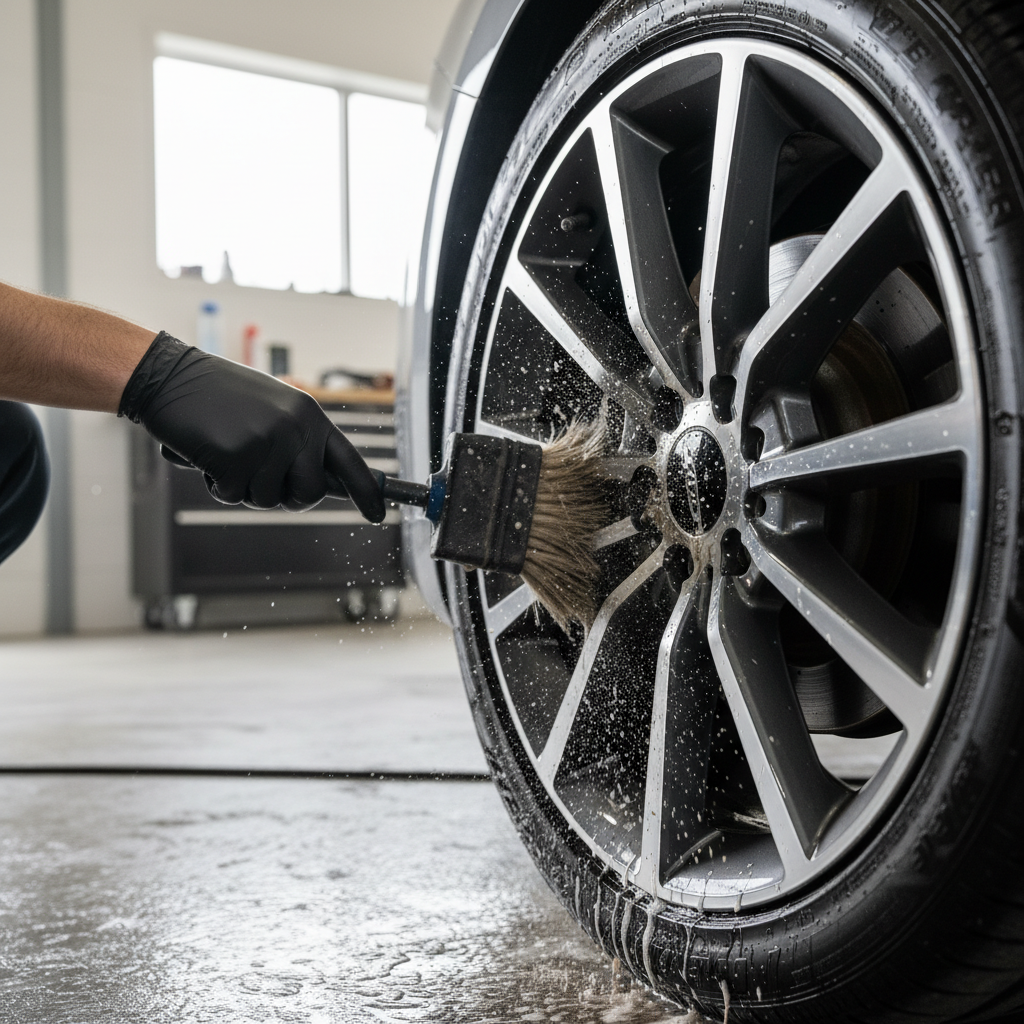
One quick note before we get into product styles: even a “soft” brush can scratch if it’s dirty, used on a dry wheel, or shared with tires and then dragged across paint-like wheel faces. Technique and separation matter as much as the brush itself.
What makes a wheel & tire brush “soft bristle” (and why it matters)
“Soft bristle” gets used loosely in listings. In real-world washing, softness is a mix of material, bristle tip finish, density, and how the brush holds grit.
- Material: Many quality wheel brushes use flagged synthetic fibers (split tips) that feel gentle but still agitate film. Natural boar hair can be very gentle, but it varies and often costs more.
- Tip design: Flagged or feathered tips glide better on clear coat. Stiff, blunt-cut bristles can bite into dirt, but also into delicate finishes.
- Density: Denser bristles spread pressure, which helps reduce accidental scuffing, especially on gloss black and polished faces.
- Grit release: A brush that rinses clean easily is safer. If it “holds onto” brake dust, you can grind that dust into the finish.
According to the U.S. Environmental Protection Agency (EPA), using practices that reduce runoff and chemical use can help minimize environmental impact. For wheel cleaning, that usually means choosing tools that clean efficiently so you’re not relying on stronger chemicals or repeated heavy rinsing.
Common reasons wheels stay dirty (even after a “good” scrub)
When people say wheels are “impossible,” it’s usually one of these:
- Spoke geometry fights you: Tight gaps and deep barrels need long-reach, flexible tools, not just a short face brush.
- Brake dust is bonded: If dust has baked on, soap alone may not cut it. You may need a dedicated wheel cleaner, used safely per label.
- Cross-contamination: Using the same brush on tires (browns out rubber) and then on wheel faces can drag grime where you least want it.
- Washing too late: Weekly rinses are easier. Waiting months often turns cleaning into a chemical and agitation battle.
- Wrong bristle stiffness: Too soft for tire scrubbing, too stiff for gloss wheel faces, so you end up overworking both.
Quick self-check: which brush setup do you actually need?
Use this as a fast match-up before buying anything.
- Wheel face finish: gloss black, polished, chrome-style coatings usually benefit from softer, flagged bristles and cleaner technique.
- Wheel design: lots of thin spokes or a deep barrel usually needs a long “barrel brush” plus a smaller detail brush.
- Tire condition: if tires look brown or greasy, you’ll want a dedicated tire brush with medium-stiff bristles, separate from wheel-face tools.
- How often you wash: frequent washing can lean softer, occasional deep cleans may need more agitation tools plus safer chemistry.
- Your wash environment: apartment self-serve bays often push you toward faster tools that rinse clean quickly.
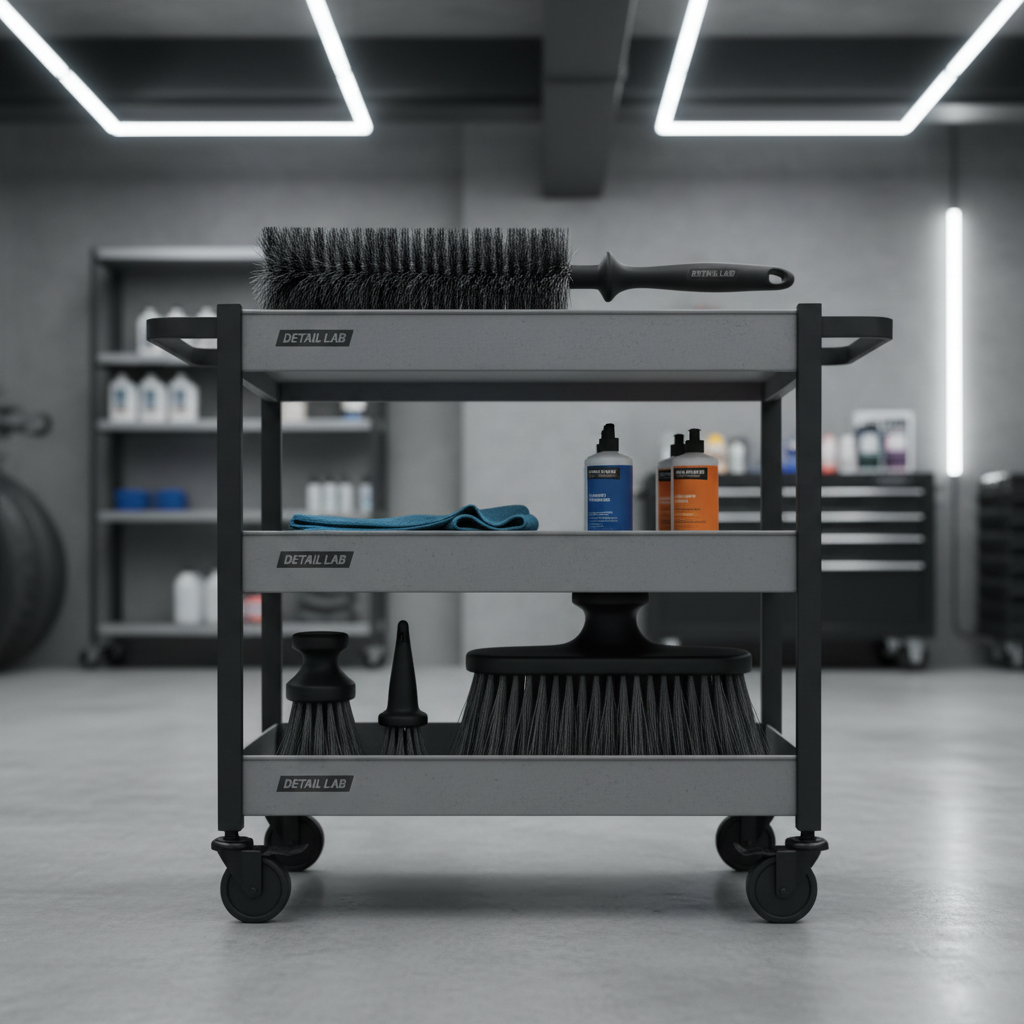
If you’re stuck between two options, it’s usually safer to go softer on the wheel face and add a separate tire brush for rubber. Most wheel damage happens on the visible face, not deep in the barrel.
Types of wheel & tire brushes (and what each is best at)
When you shop for the best car wash brushes for wheels, think in categories. Many people end up happiest with a 2–3 brush combo rather than one “do everything” tool.
1) Long wheel barrel brushes
Made to reach behind spokes and clean the inner barrel. Look for a coated wire shaft (or a fully molded core) and a tip bumper so you don’t poke the rim.
- Best for: deep barrels, tight spoke wheels, cleaning behind calipers
- Watch out for: cheap cores that can scratch if the coating splits, oversized heads that won’t fit between spokes
2) Soft face brushes (wide, gentle bristles)
These are for the visible wheel face where finishes tend to be most delicate. They shine on gloss black, painted, and clear-coated wheels.
- Best for: wheel faces, light-to-moderate brake dust, quick maintenance washes
- Watch out for: using them on tires first, they’ll pick up rubber grime
3) Small detail brushes (lug nuts, emblems, valve stems)
They get into lug holes and around tight edges. A softer detail brush is safer on sensitive finishes; a firmer one works better on textured plastic caps and heavy grime.
- Best for: lug nuts, badges, tight corners, caliper lettering
- Watch out for: metal ferrules that can tap the rim if you’re careless
4) Dedicated tire scrub brushes
Tires typically need more bite. A medium-stiff brush helps remove old dressing and the brown oxidation layer many people hate.
- Best for: rubber sidewalls, aggressive cleaning before applying new tire dressing
- Watch out for: using this on wheel faces, it’s usually too stiff
Comparison table: choosing the right brush for your wheels
Use this as a practical shortcut when shopping.
| Brush type | Primary use | Bristle feel | Ideal wheel styles | Main risk |
|---|---|---|---|---|
| Soft face brush | Visible wheel face | Soft/flagged | Gloss black, painted, polished | Grinding grit if not rinsed often |
| Wheel barrel brush | Inner barrel, behind spokes | Soft to medium | Deep barrels, tight spokes | Core/shaft contact if coating fails |
| Detail (lug) brush | Lug nuts, crevices | Soft to medium | Any, especially intricate wheels | Ferrule tapping the rim |
| Tire scrub brush | Rubber sidewall | Medium-stiff | Any tire, especially neglected | Too aggressive for wheel finishes |
How to use wheel brushes without scratching: a repeatable process
This is the part people skip because it sounds basic, but it’s where most “my brush scratched my wheels” stories come from.
- Work on cool wheels: Hot wheels can cause cleaners to dry too fast and may increase spotting risk. If wheels feel hot, wait or rinse to cool them.
- Pre-rinse thoroughly: Knock off loose grit before any bristles touch the surface.
- Use dedicated buckets/tools: One set for wheels/tires, one for paint. This reduces cross-contamination.
- Clean top to bottom: Start at the face, then spokes, then barrel, then tires last, so tire grime doesn’t migrate onto the rim.
- Rinse the brush constantly: After each section, dunk and agitate the brush in rinse water, or rinse with a hose. The goal is grit release.
- Light pressure, more passes: Especially on glossy finishes, let chemistry and repeated gentle agitation do the work.
- Dry or blow out water: Water trapped around lug nuts and center caps causes drips. A microfiber towel or a blower helps.
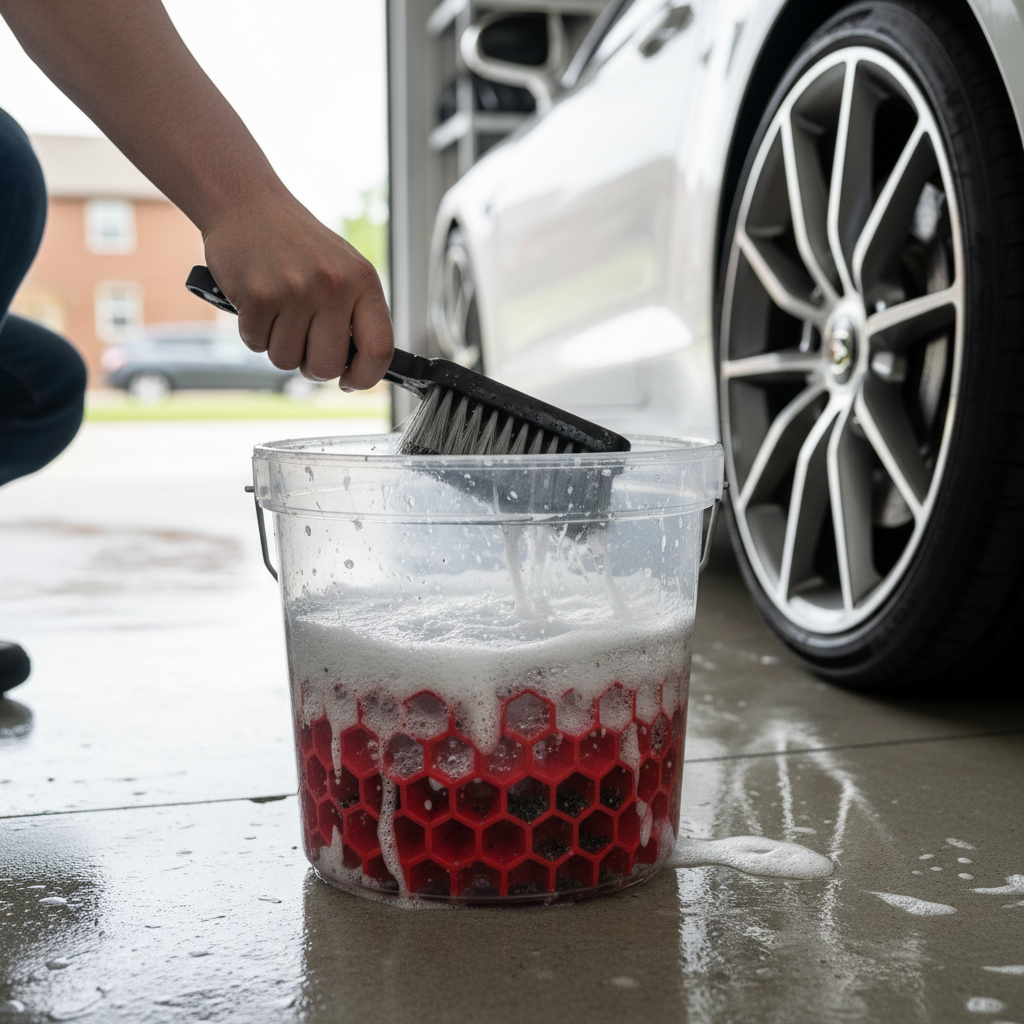
Key takeaway: if you want the best car wash brushes for wheels to stay “safe,” keep them clean and separate. A great brush used carelessly behaves like a bad brush.
Common mistakes that quietly ruin results
- Using one brush for everything: Tires are filthy compared to wheel faces, and the grime transfers fast.
- Letting cleaner dry on the wheel: Many products are safe when used as directed, but drying can leave residue or spotting. Work one wheel at a time.
- Ignoring the inner barrel: The face looks clean, but the barrel stays brown. Then you drive, heat cycles bake it in again.
- Buying “extra stiff” to go faster: You might go faster right up until you haze a finish and then you’re shopping for polish instead.
- Not inspecting the brush: If the core coating cracks or the bristles pick up embedded grit, retire it from delicate work.
When you may need stronger chemistry or professional help
If wheels feel rough even after cleaning, contamination may be bonded. That’s where dedicated wheel cleaners, iron removers, or decontamination steps come in. Use products per label directions, and if you’re unsure about finish compatibility, test in a small hidden spot first.
Also, if you see peeling clear coat, pitting, or corrosion, a brush won’t “fix” that. In many cases, it’s better to talk with a detailing professional or wheel repair shop, because aggressive scrubbing can make cosmetic issues more noticeable.
According to the National Highway Traffic Safety Administration (NHTSA), tires are safety-critical components. If you notice sidewall cracking, bulges, or cords showing, cleaning is secondary, it’s wise to consult a tire professional about safe next steps.
Conclusion: a practical “best brush” setup for most drivers
For most people, the sweet spot is simple: a soft face brush for the visible rim, a barrel brush for the inner wheel, and a dedicated tire scrub brush for rubber. That combo covers 90% of wheel designs without forcing you to over-scrub.
If you want an easy next step, start by separating wheel tools from paint tools, then replace the one brush you don’t trust. Even that small change usually improves results quickly and lowers the chance of accidental marring.
FAQ
What are the best car wash brushes for wheels if I have gloss black rims?
Look for a soft, flagged-bristle face brush and keep it dedicated to wheel faces only. Gloss black tends to show hazing easily, so frequent rinsing and light pressure matter as much as bristle softness.
Is a soft bristle brush enough to remove heavy brake dust?
Sometimes, but not always. Heavy or baked-on brake dust often needs a wheel-safe cleaner to loosen it, then a soft brush can finish the job without excessive force.
Can I use the same brush on tires and wheels?
You can, but it’s a common reason wheels end up swirled. Tire rubber holds onto grime and old dressing, so a separate tire brush is usually a smarter, low-cost upgrade.
What brush works best for cleaning behind spokes?
A long wheel barrel brush with a protected core and a soft tip helps reach behind spokes and into the barrel. If your spokes are extremely tight, a slimmer barrel brush or a small detail brush may fit better.
How do I keep a wheel brush from scratching?
Pre-rinse the wheel, never scrub dry, and rinse the brush frequently so it releases grit. Also inspect the brush head and core regularly, worn coatings or embedded debris can turn “soft” into “abrasive.”
Are boar-hair wheel brushes better than synthetic?
Boar hair can feel very gentle on delicate finishes, but quality varies and they may not agitate heavy grime as effectively. Many modern flagged synthetics strike a better balance for everyday washing.
Do I need a different brush for chrome or polished wheels?
Often yes, or at least a cleaner, softer tool reserved for that finish. Polished and chrome-like surfaces can show marks quickly, so treat them like paint: gentle tools, clean technique, and avoid cross-contamination.
If you’re trying to choose the best car wash brushes for wheels for your specific rim style, it helps to match brush shape to spoke design and keep tires separate. If you want a more hassle-free setup, consider building a small wheel-only kit with a face brush, barrel brush, and detail brush so your routine stays consistent.